

Find out more

05 February 2026

News
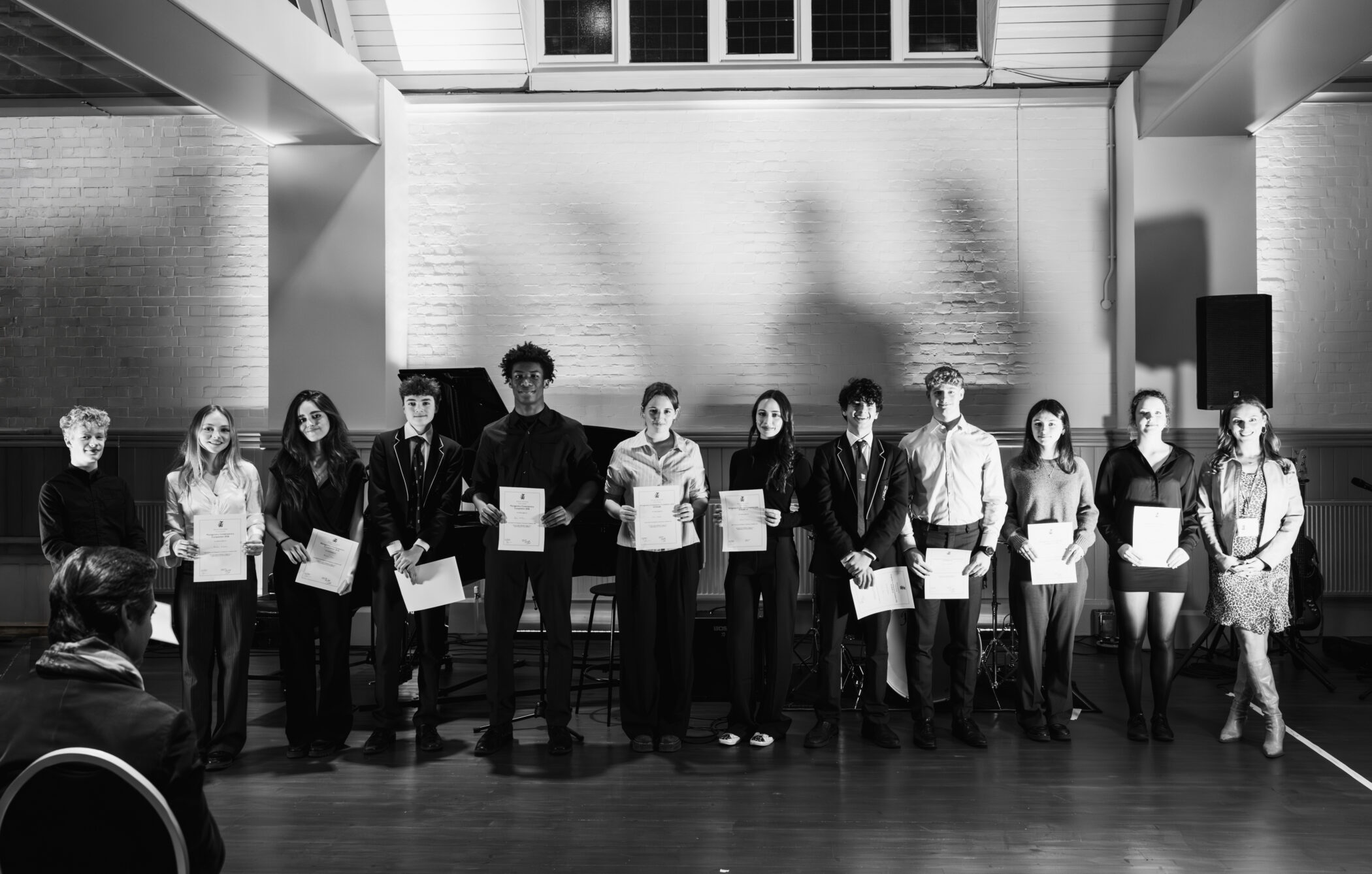
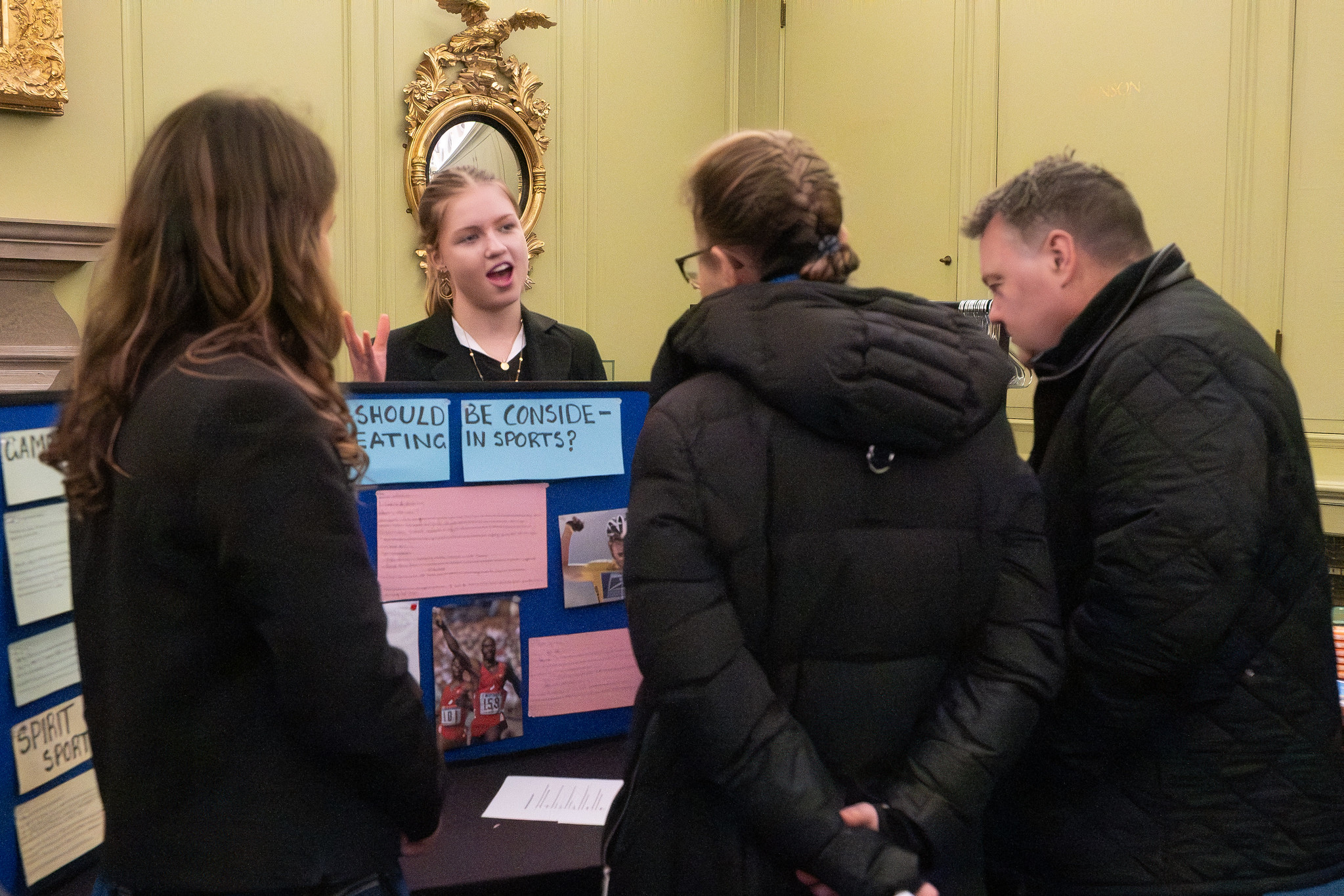
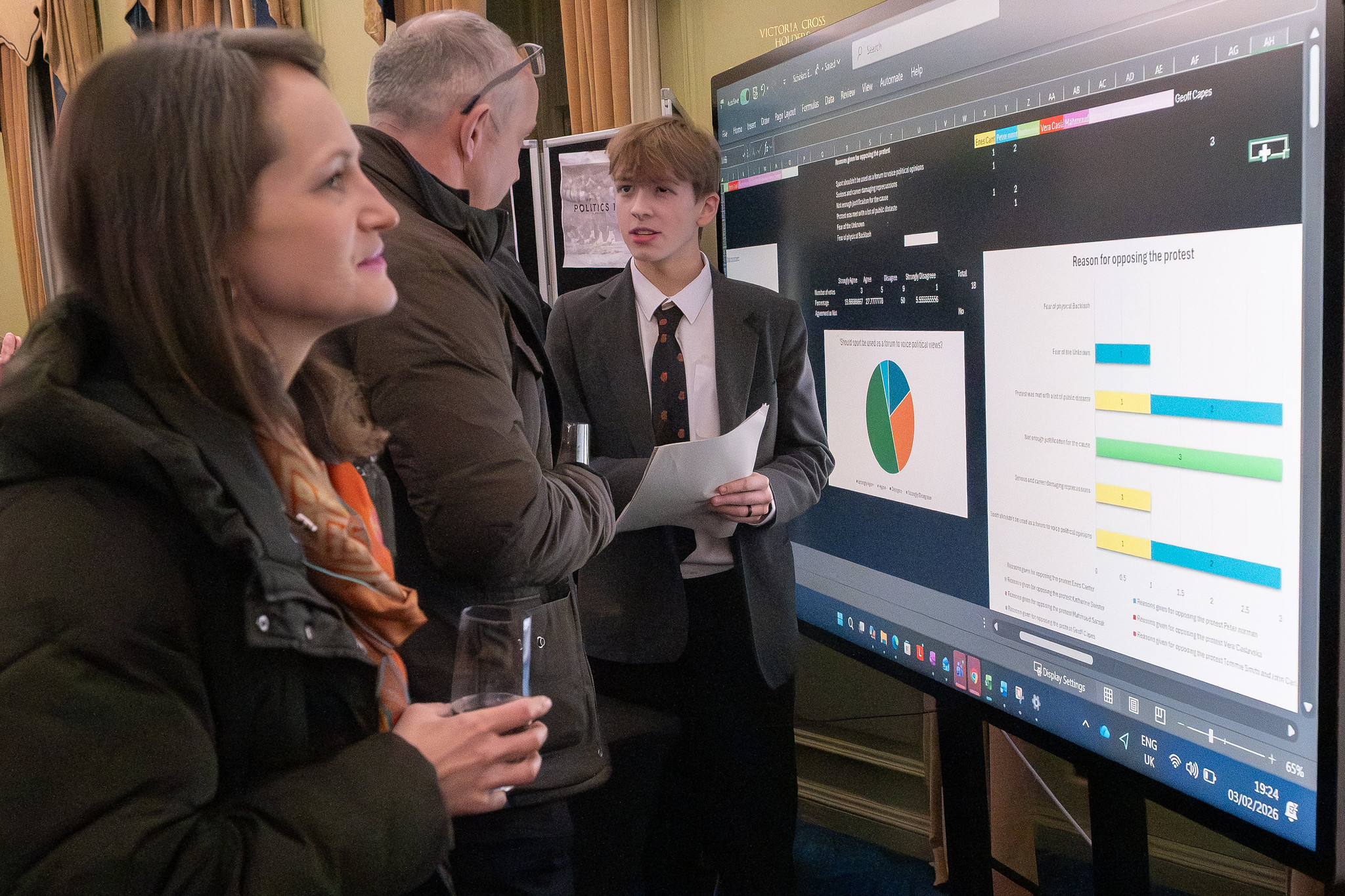
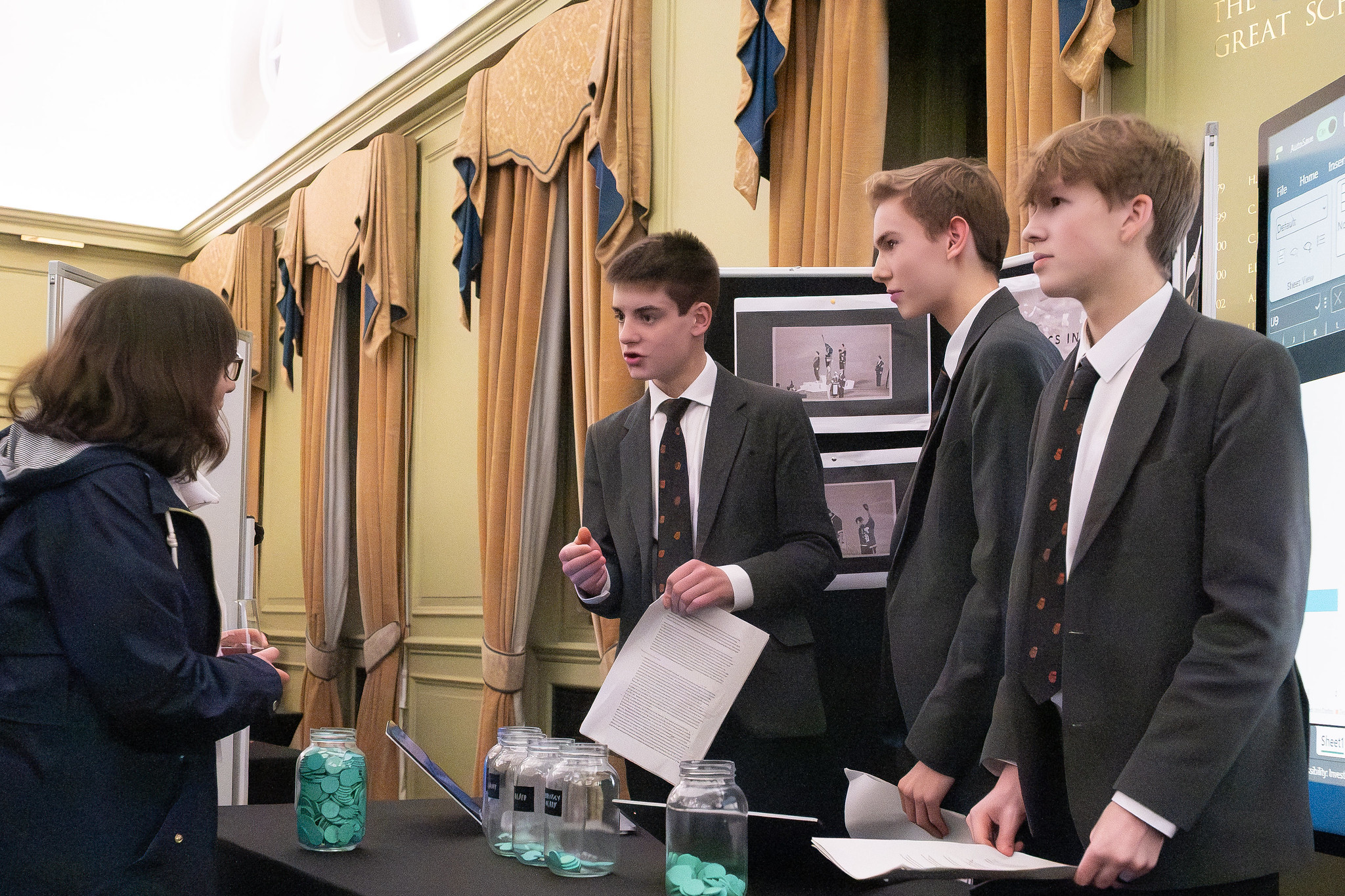
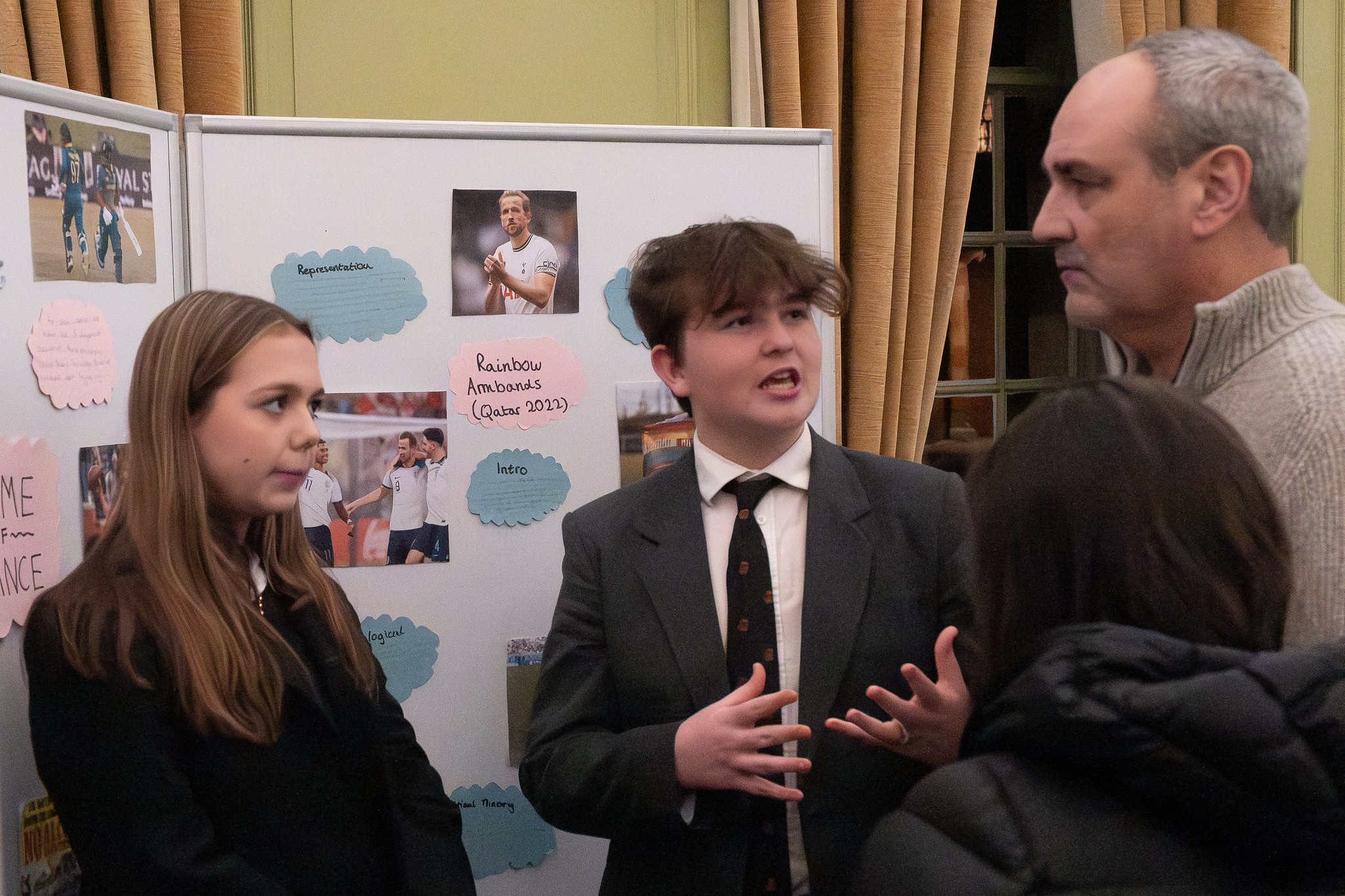
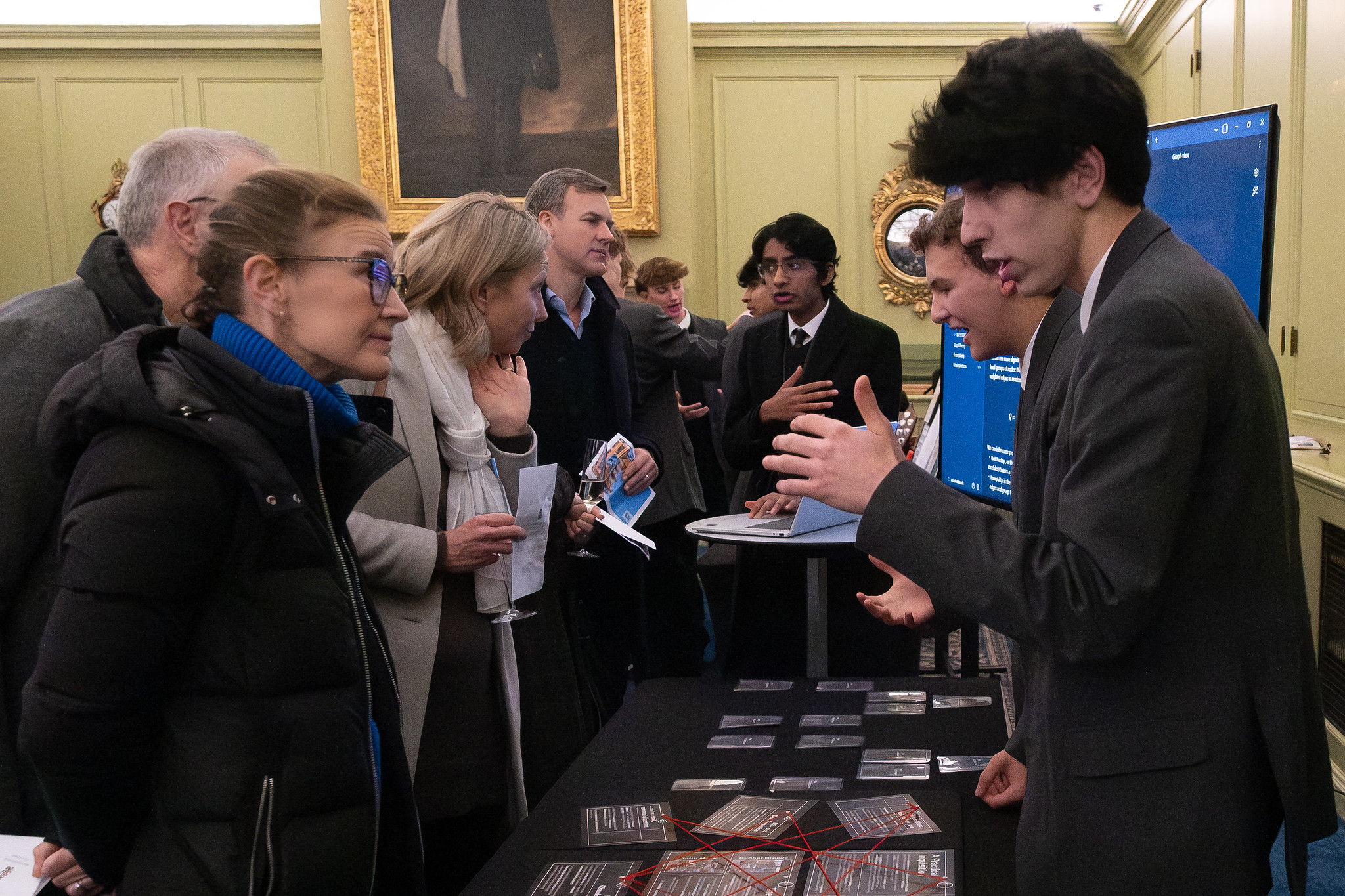
Great School was alive with energy and intellectual excitement on Tuesday evening as Fifth Form Academic Scholars presented their work at the Peter Frankopan Prize for Academic Extension. A real buzz of curiosity filled the room as parents, pupils and staff moved between project stands, watching scholars confidently present challenging ideas, explain complex theory with impressive clarity and respond thoughtfully to probing questions from visitors and judges alike.
Following the completion of ten-week extension courses in either Philosophy and Maths or Philosophy and Sport, scholars worked collaboratively in small groups to explore a question of their own choosing. The breadth and ambition of the projects on display reflected the intellectual curiosity fostered by the programme. Topics included Should sport be used as a platform to voice moral issues? (Daniel, Dominic, Max), Is this cheating? (Olivia, Mabel, Megan) and Should politics be involved in sport? You’re the commissioner (Brett, Lucas, Harry, Alex), alongside mathematically driven and ethically focused projects such as Identities (Harrison, Ed, Oliver, Finn) and The Enigma Problem (Diana, Cindy, Diya).
Visitors also engaged with timely global and societal questions, including Exploring wealth distribution and economic polarisation in Thailand and South Africa (Sophie, Chloe, Gayatri) and Can we fund the NHS sufficiently using a mathematical model whilst sustaining economic growth? (Elisa, Xanthe, Isabella, Anna). Meanwhile, How do social media algorithms influence your way of thinking? (Raphael, Raghav, Joseph) and The Game of Stance (Charlotte, William) prompted lively debate, challenging audiences to reflect on ethics, influence, and moral decision-making.
Throughout the evening, it was particularly striking how many Wellington pupils attended to support their peers. Scholars and non-scholars alike crowded around displays, asking thoughtful questions, offering alternative perspectives and enthusiastically joining in the intellectual debates — reflecting a culture in which open discussion and academic ambition are actively shared across the community.
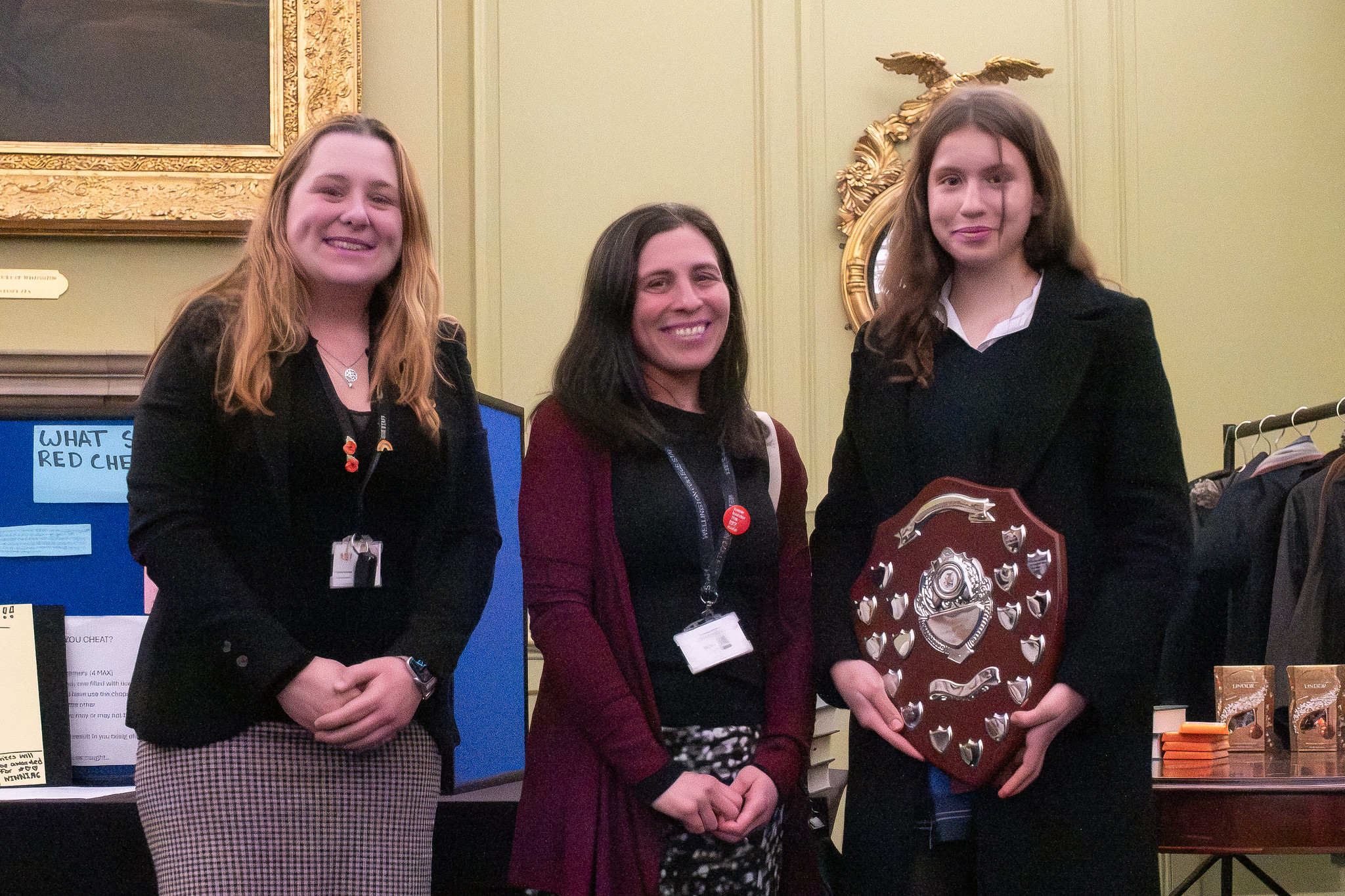
The winning project, The Mathematics and Implications of Gerrymandering, presented by Alida, Camilla and Polina, explored how mathematical models can be used to shape electoral boundaries, alongside the wider political and ethical implications of doing so. The project stood out for its depth of understanding, clarity of explanation and seamless teamwork. Judges praised the group highly, commenting:
“The winners of the Academic Scholars’ Presentation Evening are a group who produced an excellent display, worked hard to understand the theory behind their topic, and gave thoughtful, well-reasoned answers to challenging questions. Such work is a true example of what it means to be a scholar.”
(Dr Caroline Evans, Judge)
Two runner-up groups were also warmly commended by Dr Ruth Lexton for the quality and originality of their work. Raphael, Raghav, and Joseph delivered a ‘brilliantly explained, interactive project’ on social media algorithms, while Charlotte and William impressed with The Game of Stance, offering a ‘thoughtful and perceptive explanation that skilfully unpacked the moral and ethical nuances of complex situations’.
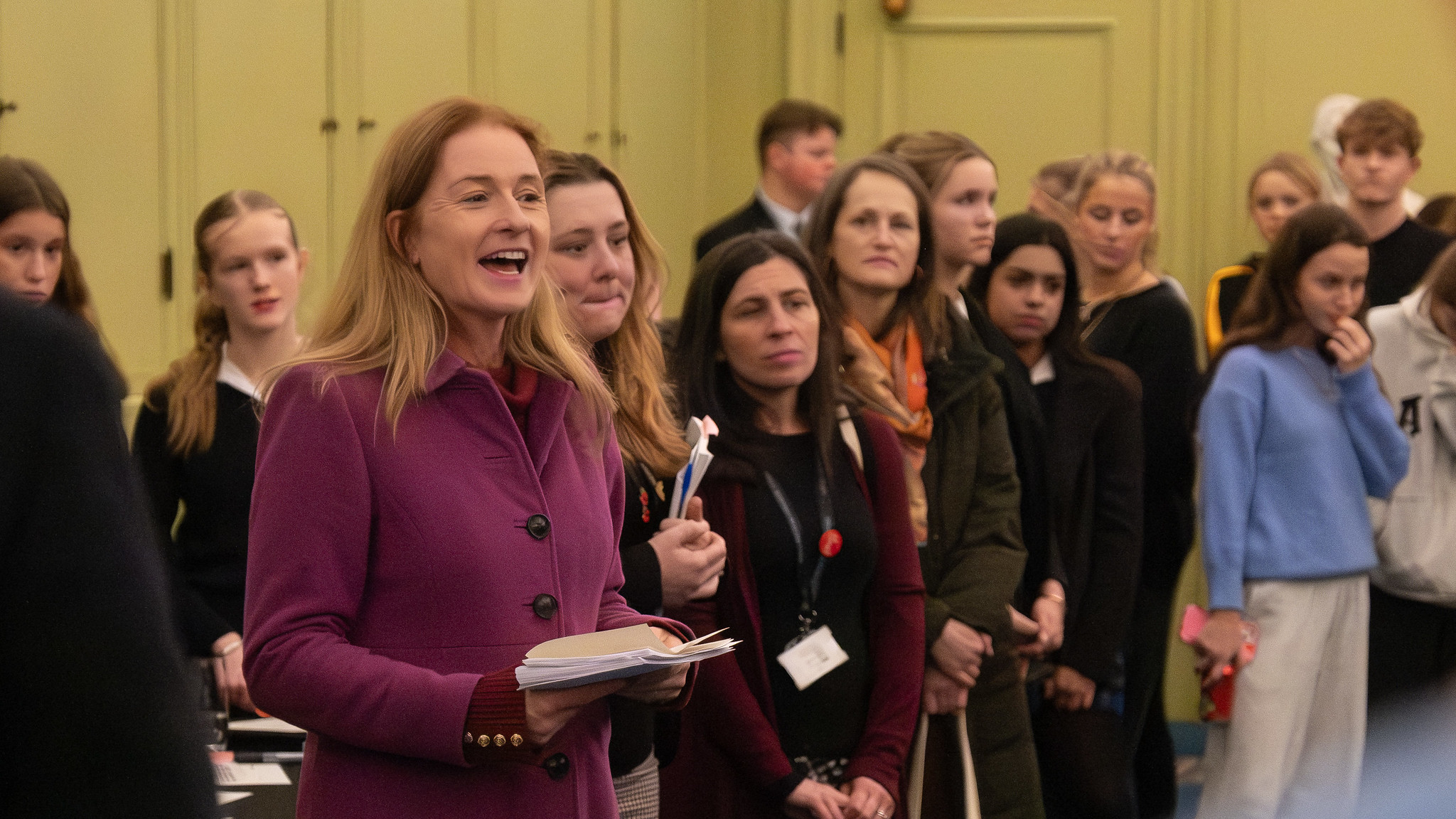
The evening concluded with judges’ remarks, reflecting on the exceptionally high standard across all projects and praising the scholars’ confidence, intellectual maturity, and willingness to engage critically with complex ideas.
Overall, the event was a resounding success, celebrating not only academic excellence but also the joy of learning, the thrill of discovery and the power of clear, confident communication. It was a fitting showcase of the ambition and rigour that underpin the Academic Scholars programme, and a testament to the dedication, creativity and intellectual curiosity of the pupils involved — qualities that will undoubtedly serve them well as they continue their academic journeys.

Prev article
Next article