

The birth of the College
Wellington College was first proposed during discussions between the Prime Minister, Lord Edward Stanley, 14th Earl of Derby, and Queen Victoria and Prince Albert, following the death in September 1852 of Arthur Wellesley, Duke of Wellington, Field Marshal and twice Prime Minister.
Wellington played a key role as leader of the British forces in the Allied army which opposed French Imperial expansion under Napoleon Bonaparte, eventually defeating the French forces at the Battle of Waterloo in 1815. As a result he was seen as a national hero. On his death, Queen Victoria described him in a private letter to her uncle as ‘the GREATEST man this country ever produced, and the most devoted and loyal subject,’ and he was given a state funeral.
Victoria, Albert and Derby agreed that the most suitable lasting memorial to the Duke would be a school to educate the sons of Army officers who had died in service. Funded by charitable giving, the school would offer a high-quality education at little or no cost to the boys’ families. These students were known as Foundationers. Soon it was decided that the sons of living officers and of civilians would also be admitted, paying higher fees to help subsidise the College’s running costs.
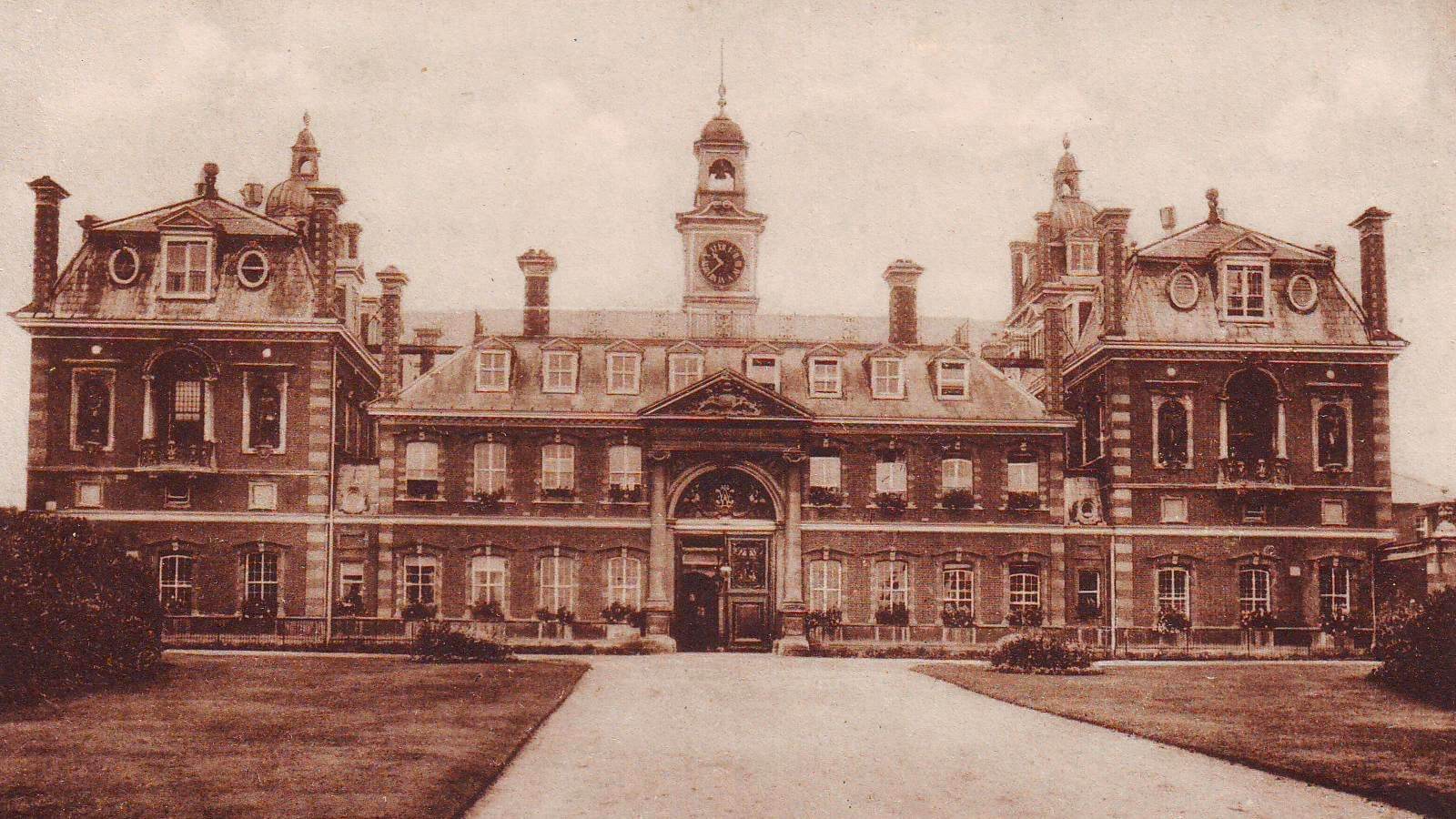
A public appeal was launched, and received donations from over 10,000 individuals. Every soldier in the British Army also gave a day’s pay towards the project. Wellington College was granted its Royal Charter in December 1853. The College buildings in Crowthorne were designed by John Shaw Jr (1803-1870), with Queen Victoria laying the foundation stone in 1856.
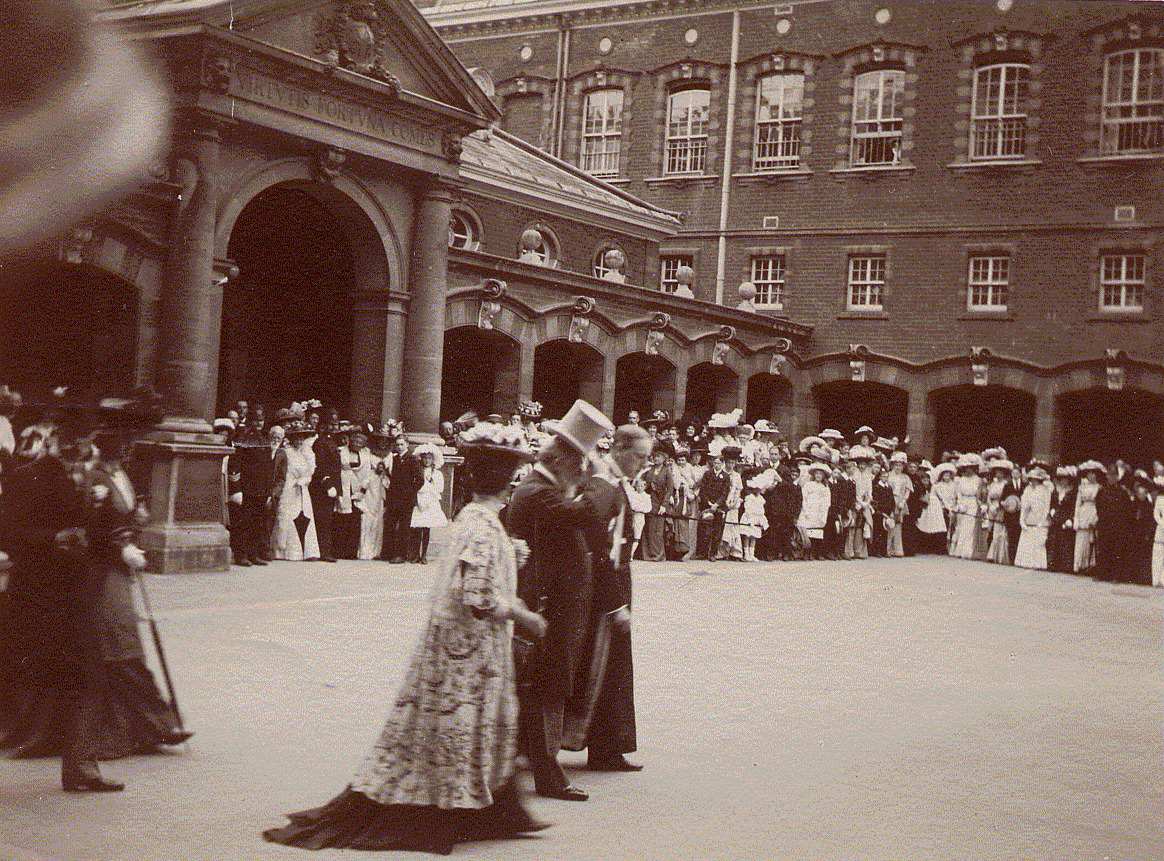
The first 76 boys, aged between eleven and fifteen, arrived in January 1859. 47 of them were Foundationers, paying minimal fees. A week later, Queen Victoria performed the official opening ceremony.
Prince Albert’s vision
Prince Albert took a strong personal interest in the College, serving as its first President and personally chairing all the early Governors’ meetings. He had lengthy correspondence with the first Master and others involved in the project, and made numerous official and unofficial visits to the Wellington site before and after the College opened. He influenced the choice of architect, donated several hundred books to start the College Library, financed the Prince Consort’s History Prize, and much more.
Albert’s involvement sprang from his belief that education was the key to creating a better society, and his view that existing British public schools were narrow and backward-looking in their traditions and curriculum. He wished to create a new kind of school in Britain, one which would give its pupils ‘a practical and professional education’ fitting them for all spheres of modern life. He insisted that the new school should teach not only Latin and Greek, but the more modern disciplines of mathematics, sciences, modern languages, and history, hoping that other British schools would follow this example. Wellington College was a trailblazer in this respect, and our current mission statement, ‘Pioneering education to serve and help shape a better world,’ therefore draws directly on Prince Albert’s original vision for the school.
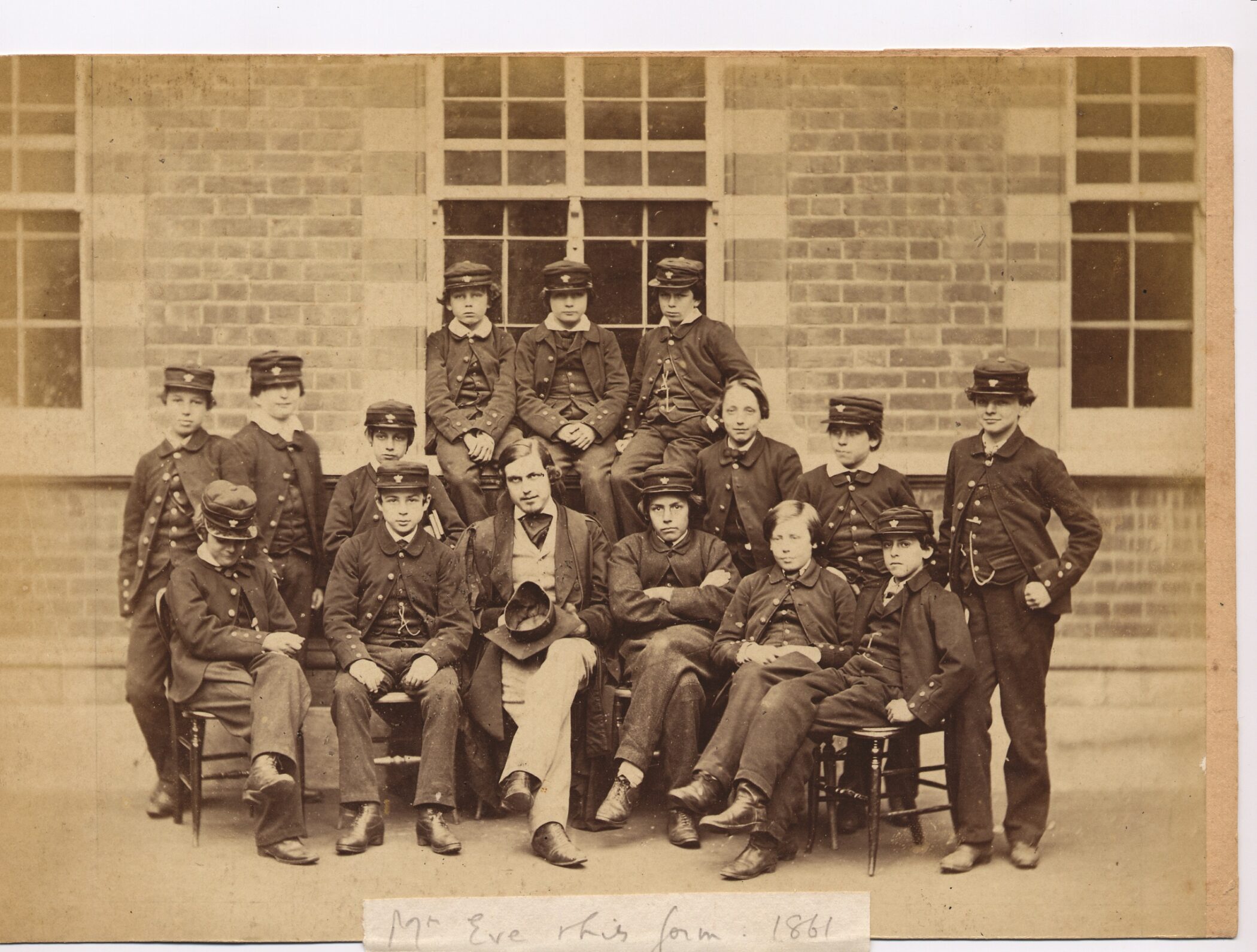
1861 early pupils and teacher
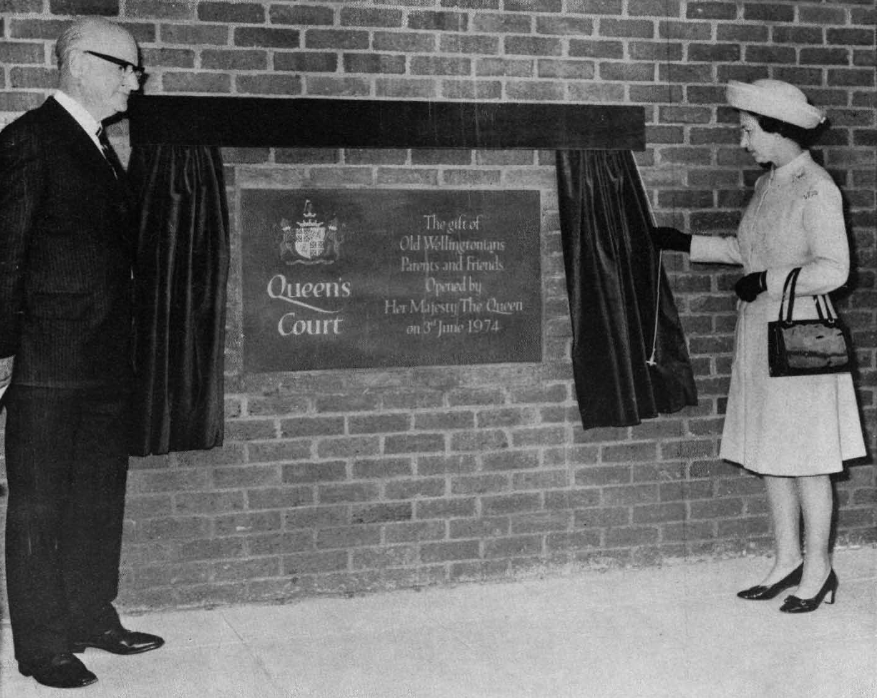
1974 Queen's Court opening
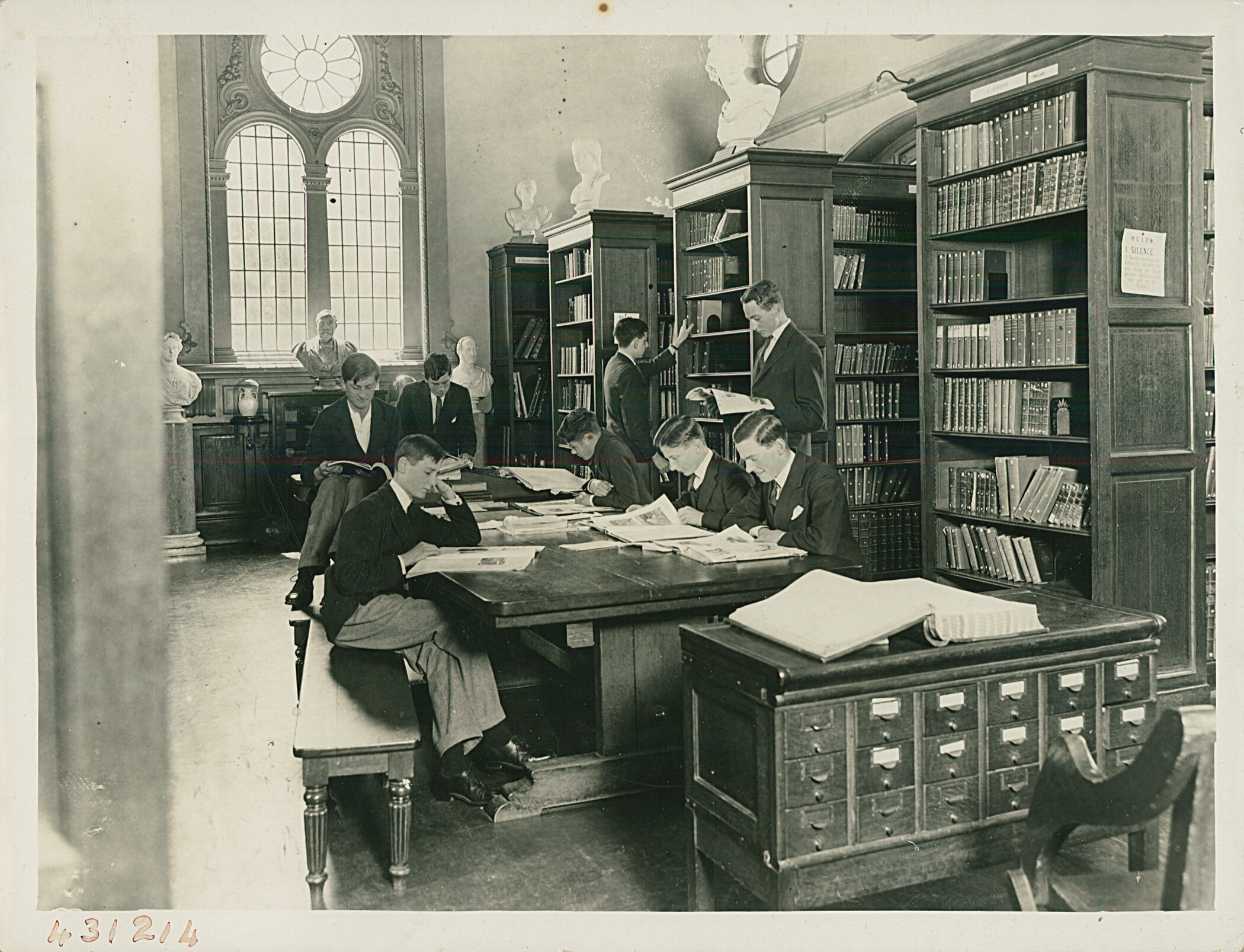
Library 1932
Growth and change
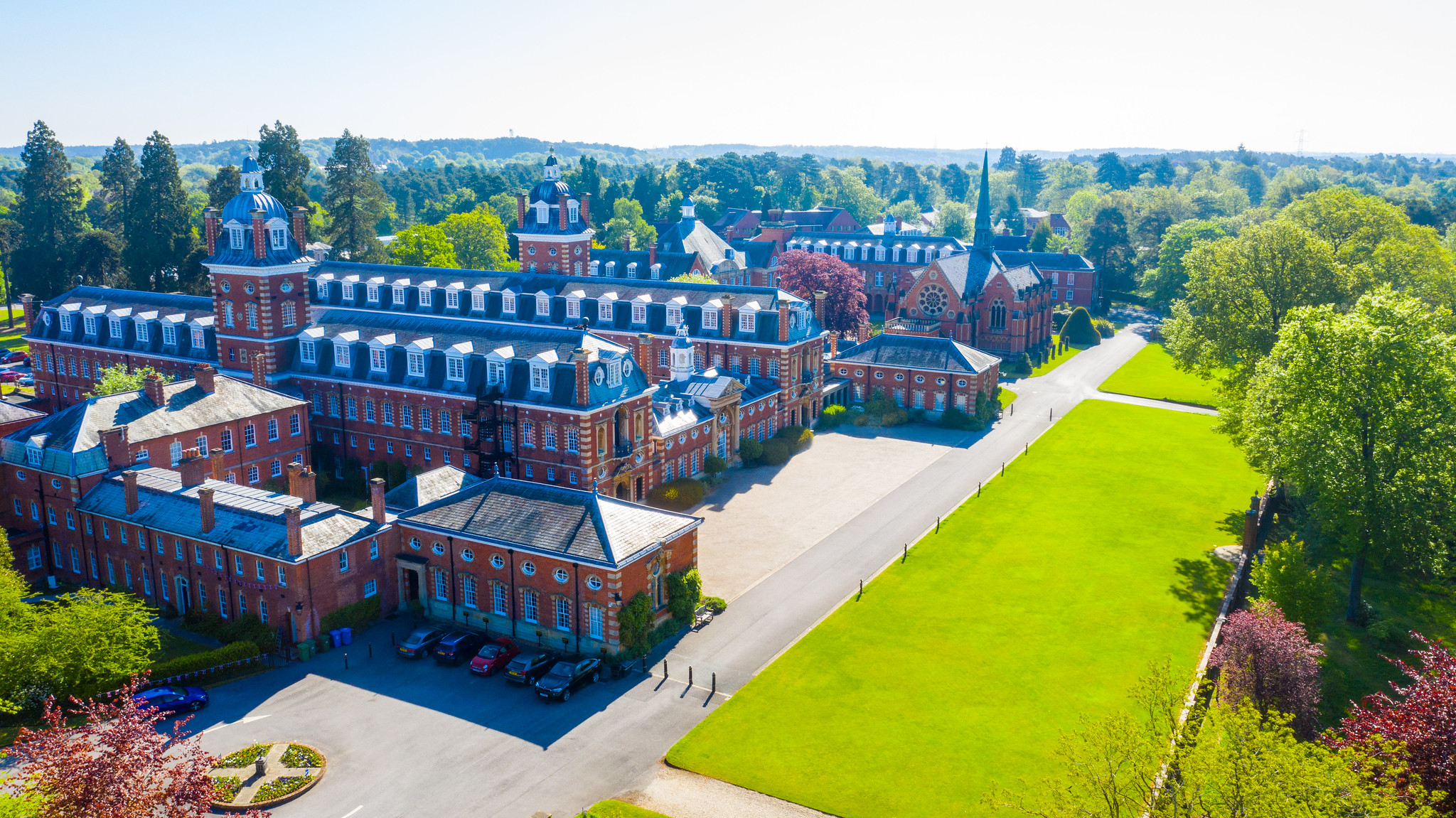
During its 160+ years of existence, Wellington College has grown and developed in size and scope. More buildings have been added to the College’s beautiful and extensive site in Berkshire, and from eight original dormitories there are now 18 Houses accommodating 1100 pupils. Important heritage areas which remain include Great School and Waterloo Hall in the historic Shaw buildings, the Victorian Gothic Chapel by George Gilbert Scott, and the 1906 main Dining Hall.
The original Foundation meant that the College had a strong connection with military families for many years. Because of this, a total of over 1200 Old Wellingtonians were killed in the two World Wars. More information about Wellingtonians in WW1, including a full Roll of Honour, can be found on our memorial website here: Wellington College | Digital Archives. The concept of service, still central at Wellington, is now understood in a much wider context.
In 1952, a Supplementary Royal Charter extended Foundationer status to the sons of deceased officers of any of the armed services, and in 2006 another change widened the scope yet further. In 2010 the College created the Prince Albert Foundation, aiming to allow children from all backgrounds access to a transformative education at Wellington.
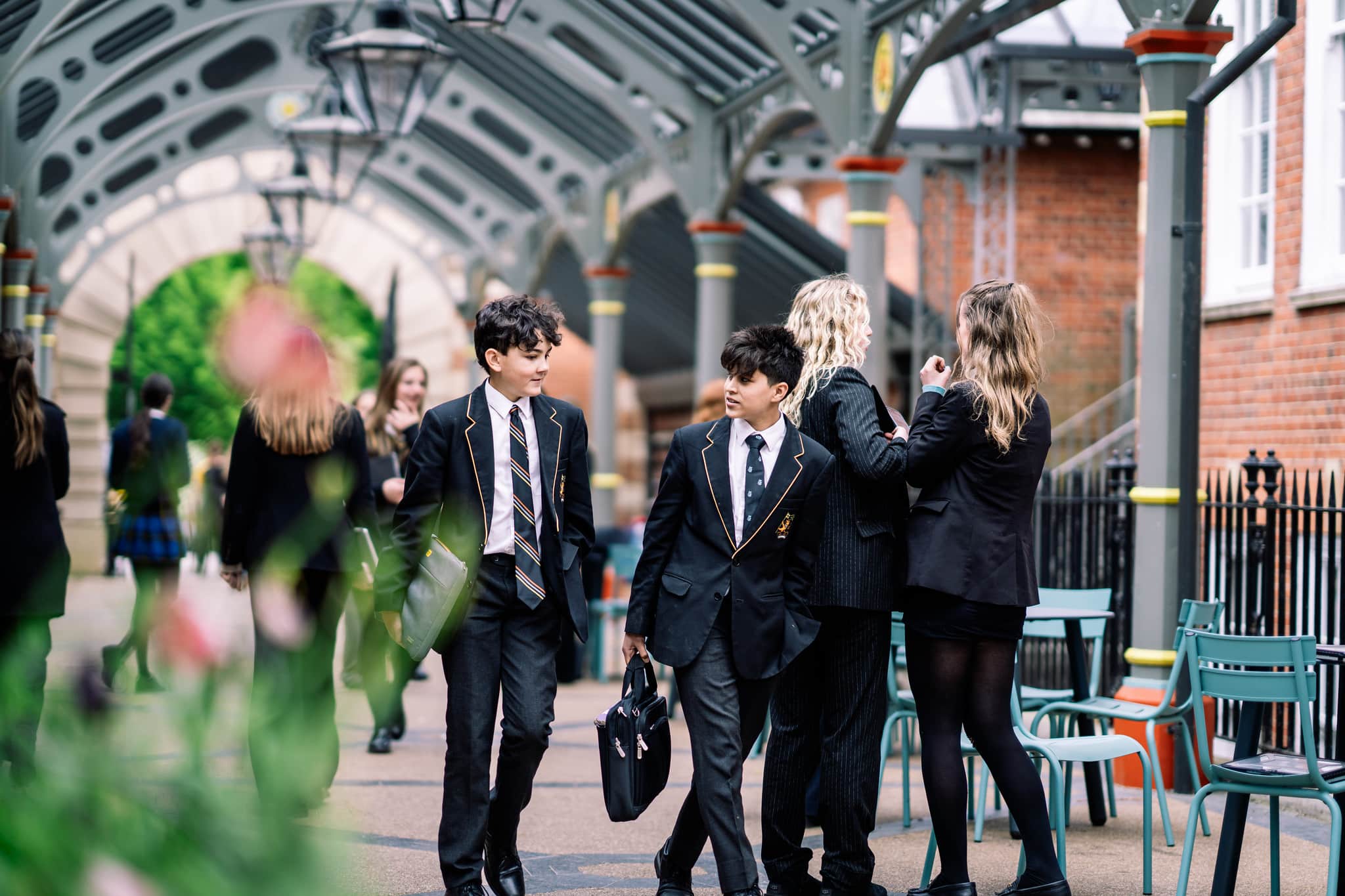
Girls were admitted to the Sixth Form in 1975, and the school started its journey to full co-education in 2006. There are now 8 girls’ Houses and one mixed House, giving an overall 50:50 balance of boys and girls.
Better Together: The Path to Co-education at Wellington College
The 21st century
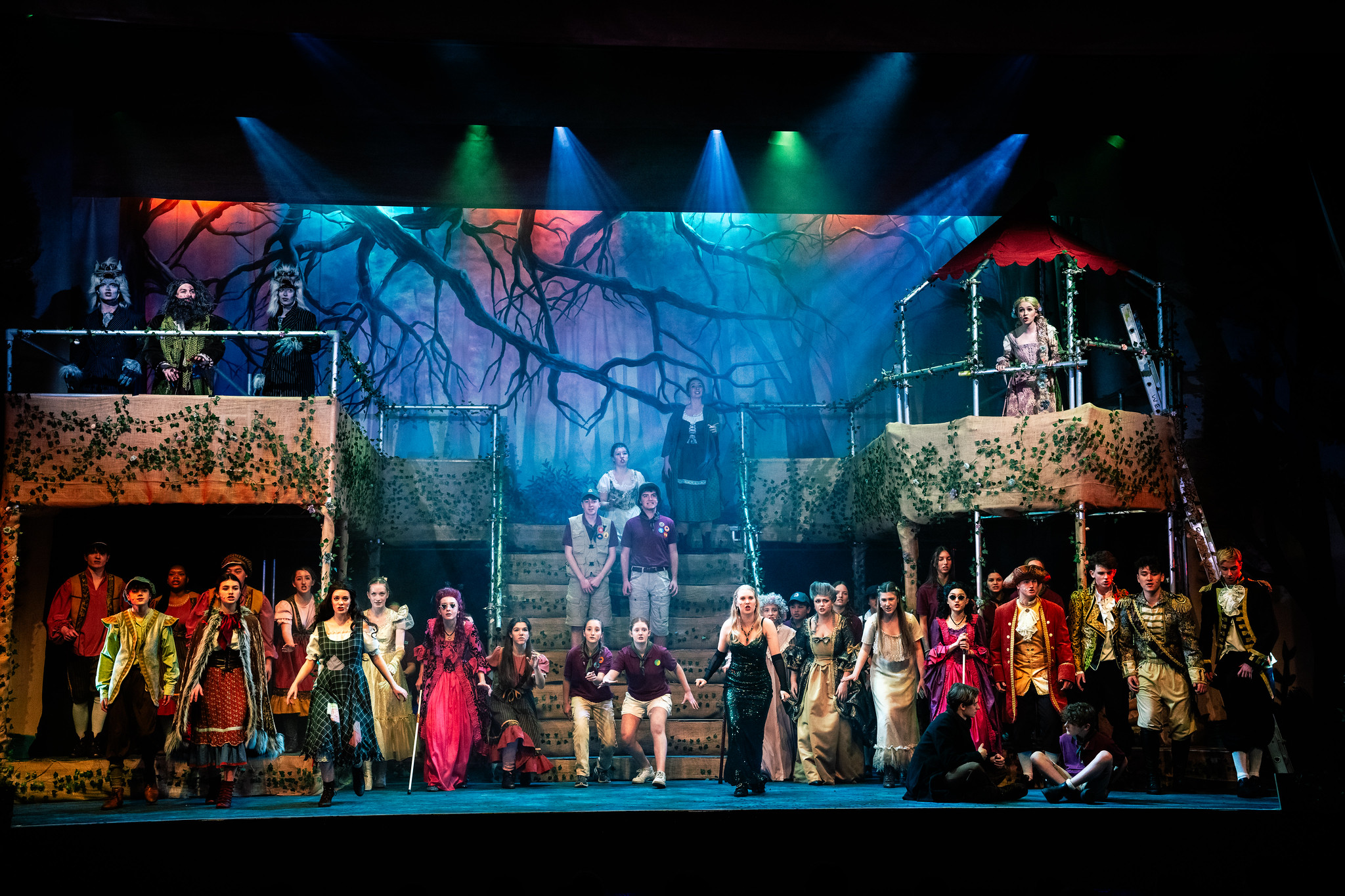
Since 2000, the pace of change at Wellington has accelerated, bringing innovation in many areas. Physical additions to the College campus include more modern pupil accommodation, new teaching facilities for Modern Languages, English and Mandarin, a purpose-built Performing Arts Centre, and a dedicated Sixth Form Centre. Sporting facilities have continued to expand, notably with the Robin Dyer Centre, and the Library interior has been transformed into a bright modern space with a number of study areas. The Dining Hall’s provision has been supplemented by the addition of the V&A Cafe, serving a ‘grab-and-go’ lunch option and providing a social hub for the whole College community.
In 2006, Wellington started its journey to full co-education with the admission of girls at 3rd Form and upwards. There are now 8 girls’ Houses and one mixed Sixth Form House, giving an overall 50:50 balance of boys and girls. The pattern of boarding has also changed, with unbroken terms giving way to weekly boarding in which most pupils return home each weekend.
As take-up for the original charitable Foundation places has fallen, the College has sought new ways of fulfilling our founders’ vision of transforming lives through education. In 2010 we created the Prince Albert Foundation, offering 110% bursaries to selected children from backgrounds of socio-economic disadvantage. Currently 10-15 Prince Albert Scholarships are awarded each year, mostly at 16+.
The century has also seen the creation of the ‘Wellington Family of Schools,’ working with partners who share our values to establish and support world class schools around the world. Wellington College International currently comprises 8 schools across China, India and Thailand, with more in the pipeline. Wellington College also supports pioneering educational research, development and professional learning worldwide, through its learning hub The Bridge and its annual Festival of Education. Our Global Citizenship programme is the modern vehicle for Prince Albert’s original aims, enabling pupils to become socially-engaged change-makers with a positive impact in society.
Many of these new initiatives were took place under the transformative 13th Master, Anthony Seldon, Master from 2006 to 2014. He is perhaps best known for establishing our Wellbeing Programme, the first such initiative in any UK school and still a cornerstone of our curriculum.
Our archives and history
You can explore many aspects of our history on the continually-developing Wellington College Heritage website, here: Welcome to our heritage site. – The Wellington Community
The College Archives contain a wealth of records charting the school’s history and giving a fascinating insight into Wellington life through the years. Many of the archives, including the complete set of College Yearbooks and the Wellingtonian magazine, have been digitised and are available on our archive website, which is password protected. For access to this, or for any other enquiries about our history, please contact the College Archivist by emailing archive@wellingtoncollege.org.uk