

Find out more

30 April 2026

News
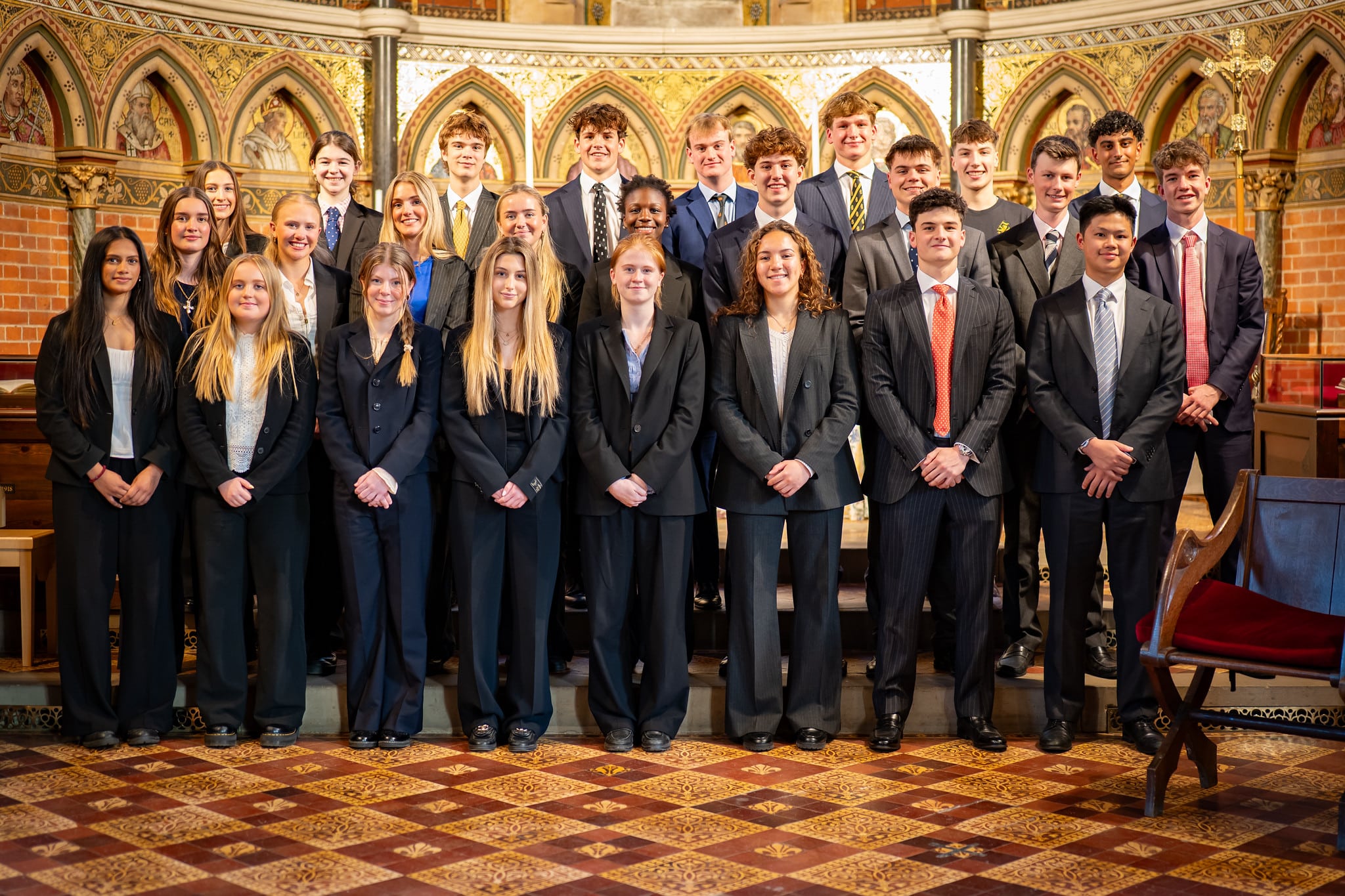
What does it mean to be human in an age of AI? This urgent question lay at the heart of this year’s Upper School Scholars Programme, culminating in a wonderful black-tie dinner last week. Scholars pursued their own research questions, shaped by their intellectual interests and ambitions, producing detailed and academically rigorous investigations into the theme. Alongside this, they were encouraged to think creatively through the “unessay”, a non-traditional form that transforms research into compelling outputs such as visual art, data modelling, or a podcast, designed not only to communicate ideas but to raise awareness and inspire change.
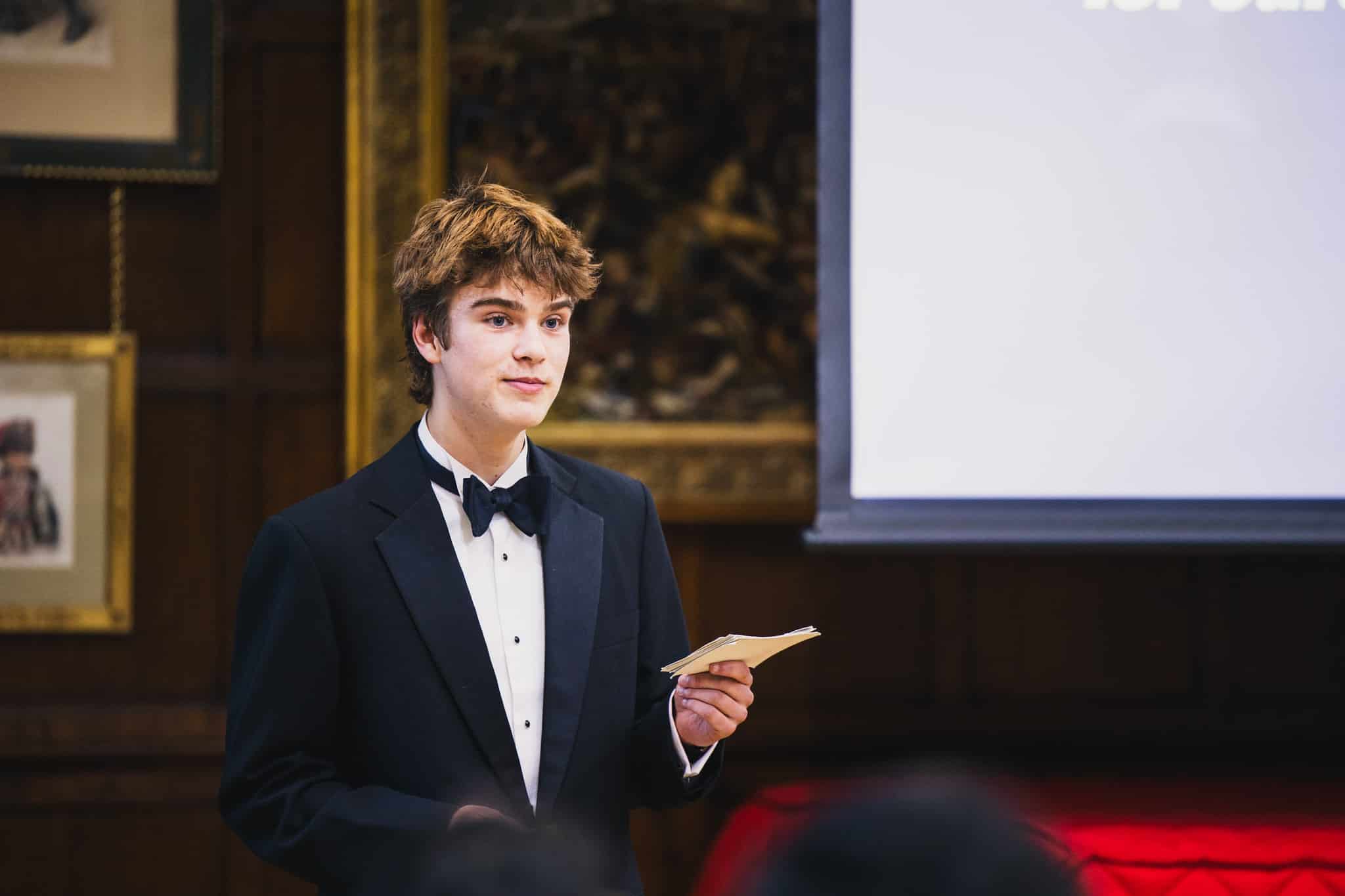
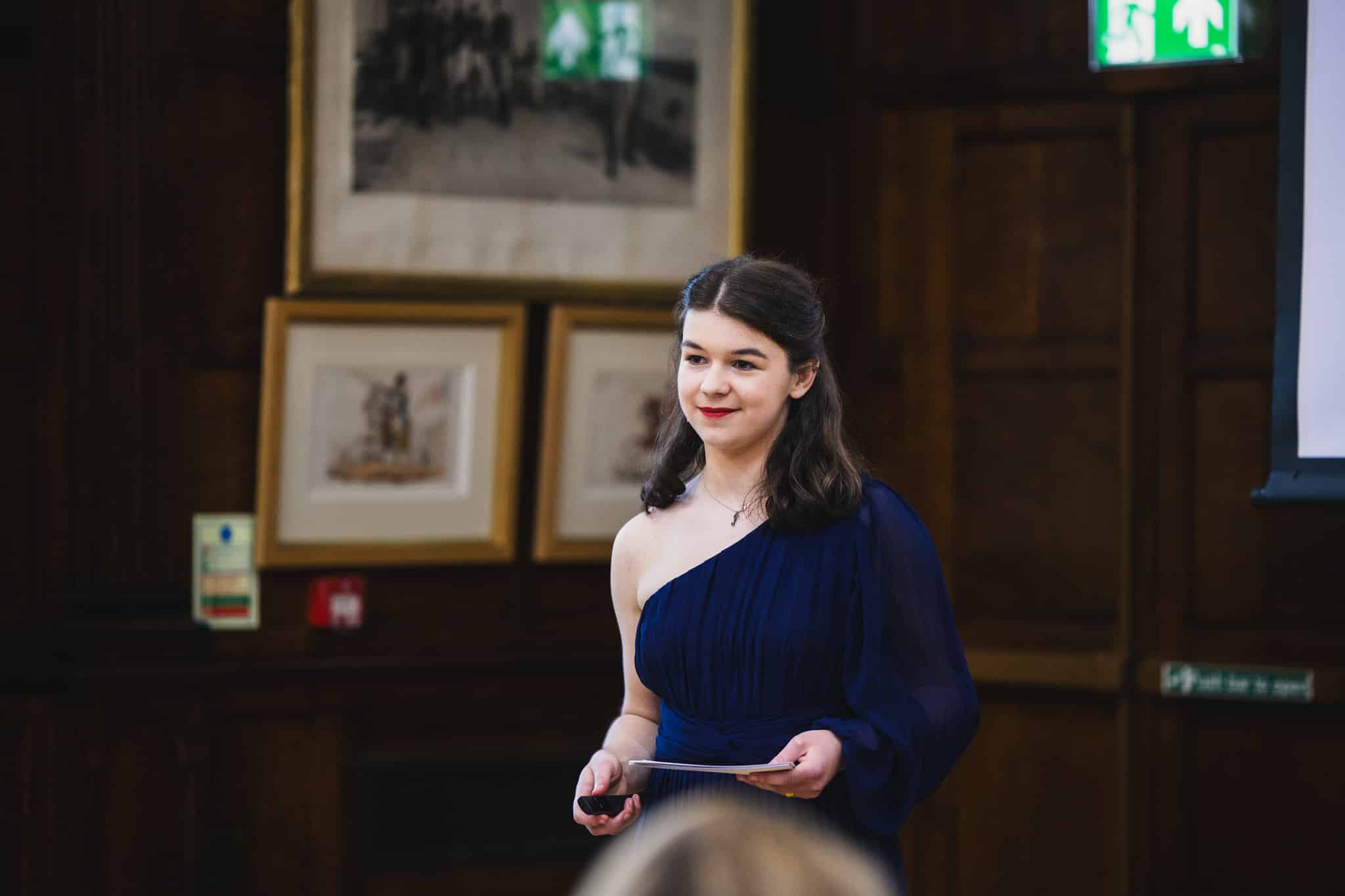
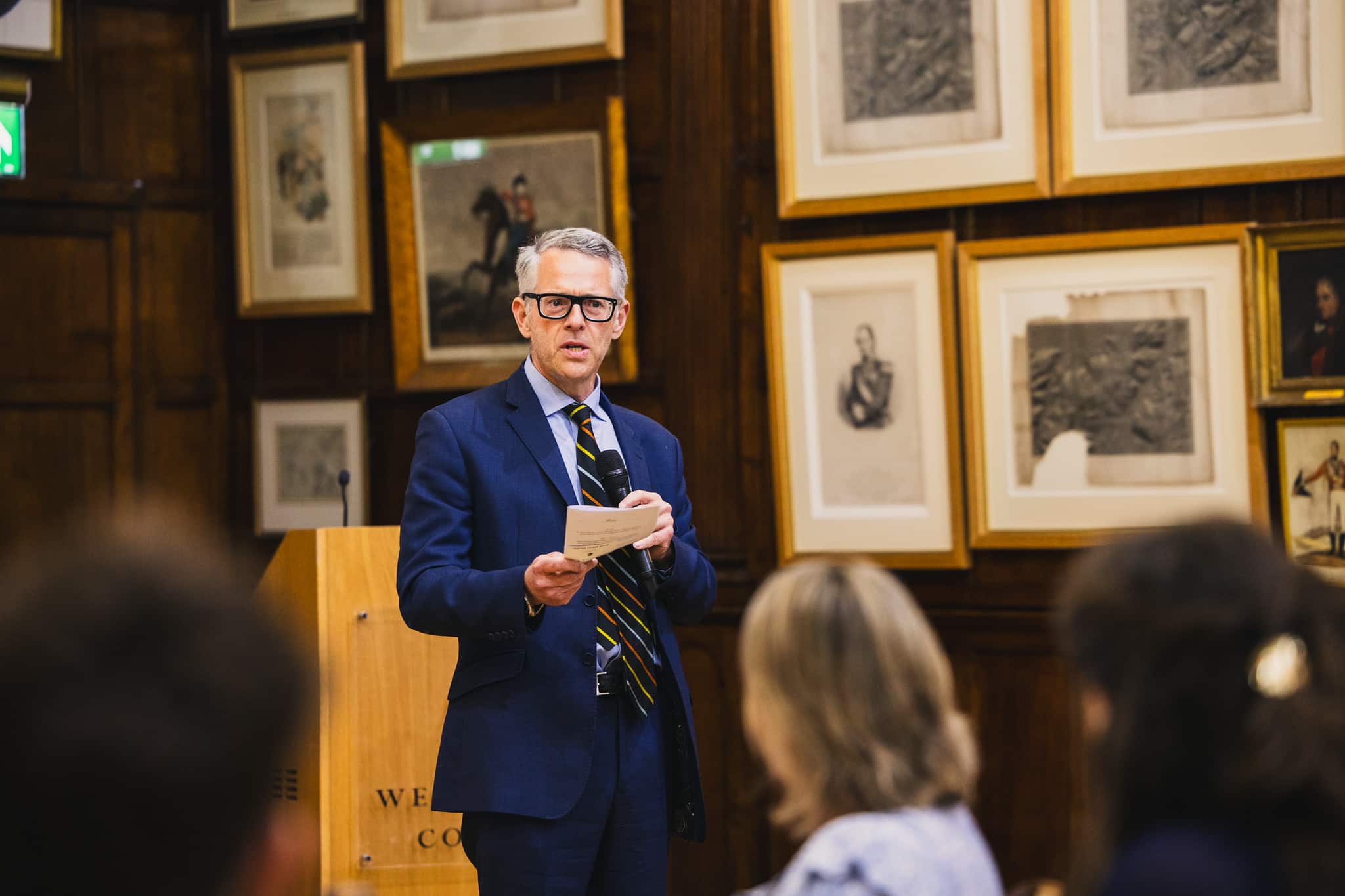
The evening brought together students and staff to celebrate the achievements of our Upper School academic scholars. Each scholar invited a member of staff who had made a significant difference to their academic journey at Wellington, the result was not only a celebration of scholarship, but an occasion filled with lively conversation, shared reflection, and genuine enjoyment of one another’s company.
During the Michaelmas Term, scholars explored the theme of “Being Human in the Age of AI” through a carousel of interdisciplinary mini-courses on geopolitics, intellectual liberty, consciousness, and storytelling, before working in the Lent Term in interdisciplinary pairs to develop their own research projects across the sciences, humanities, and arts.
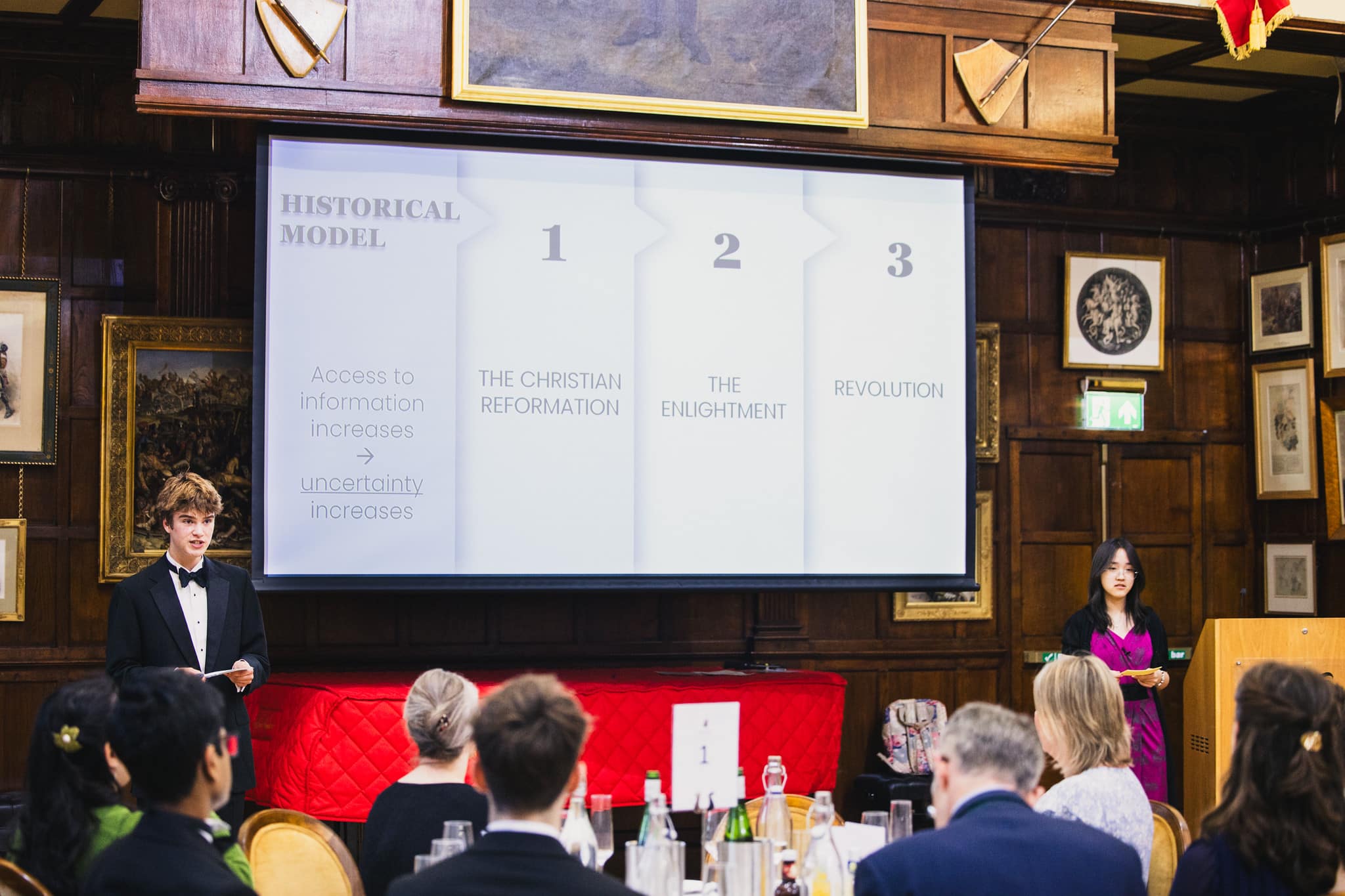
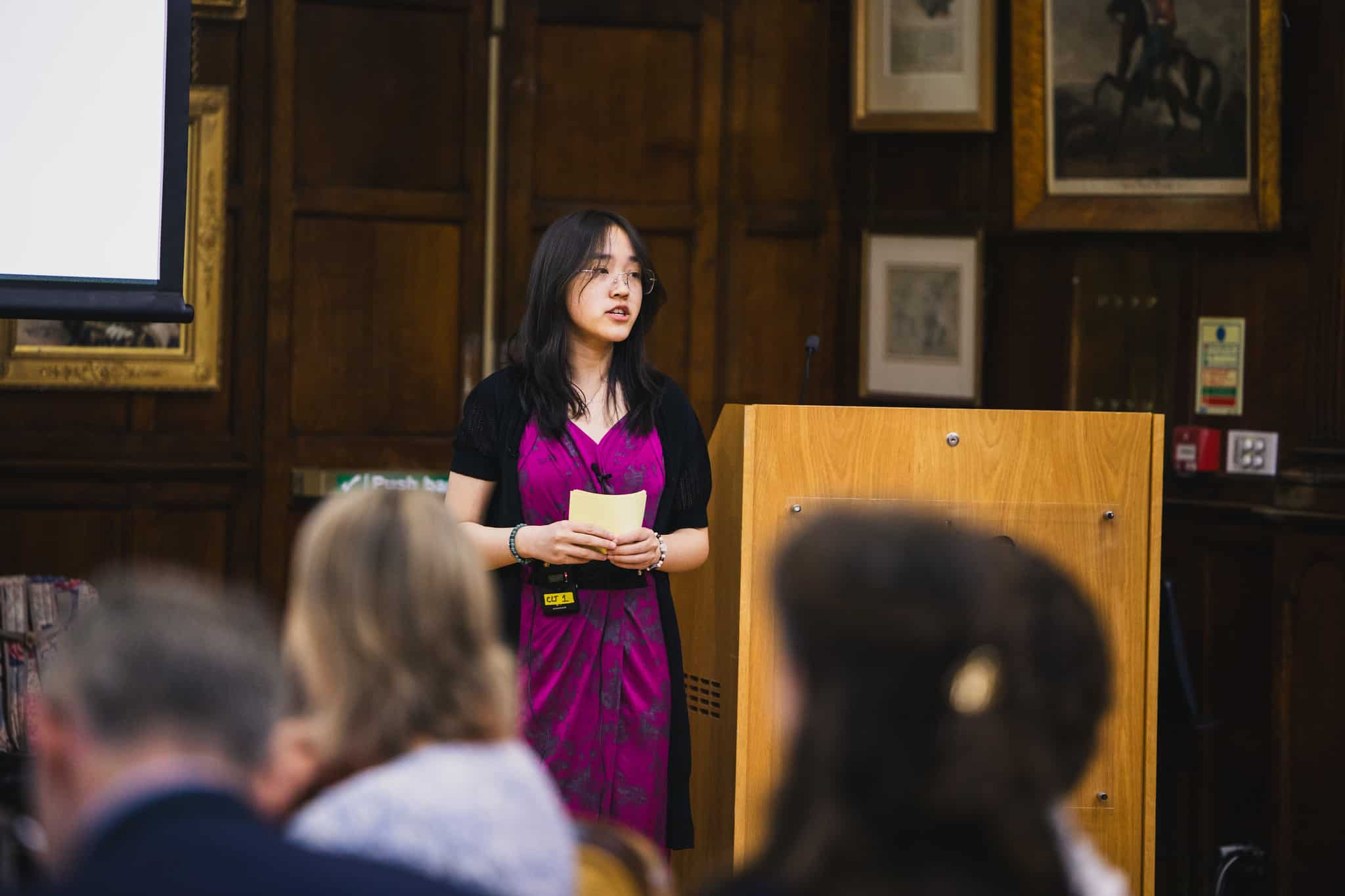
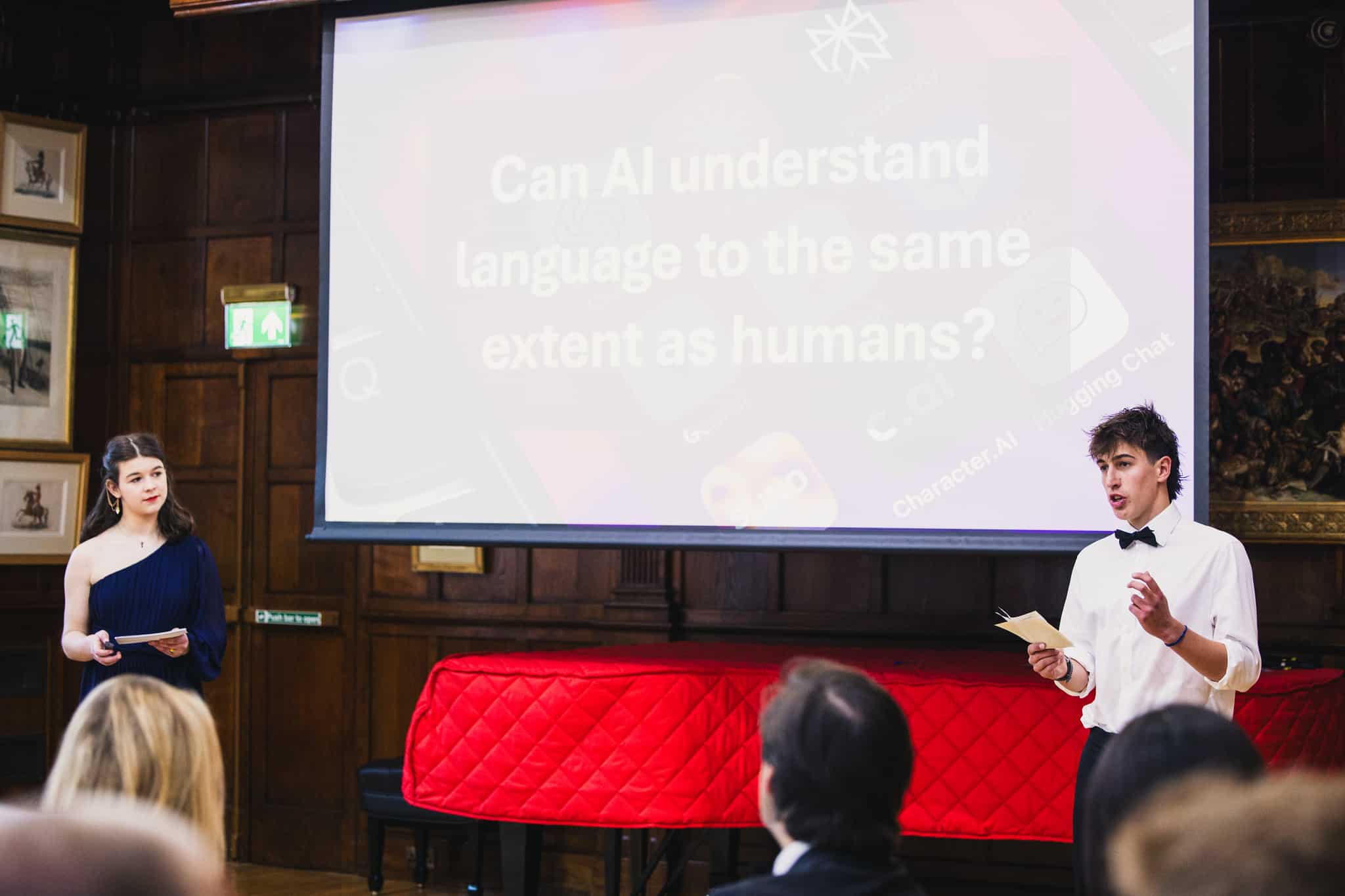
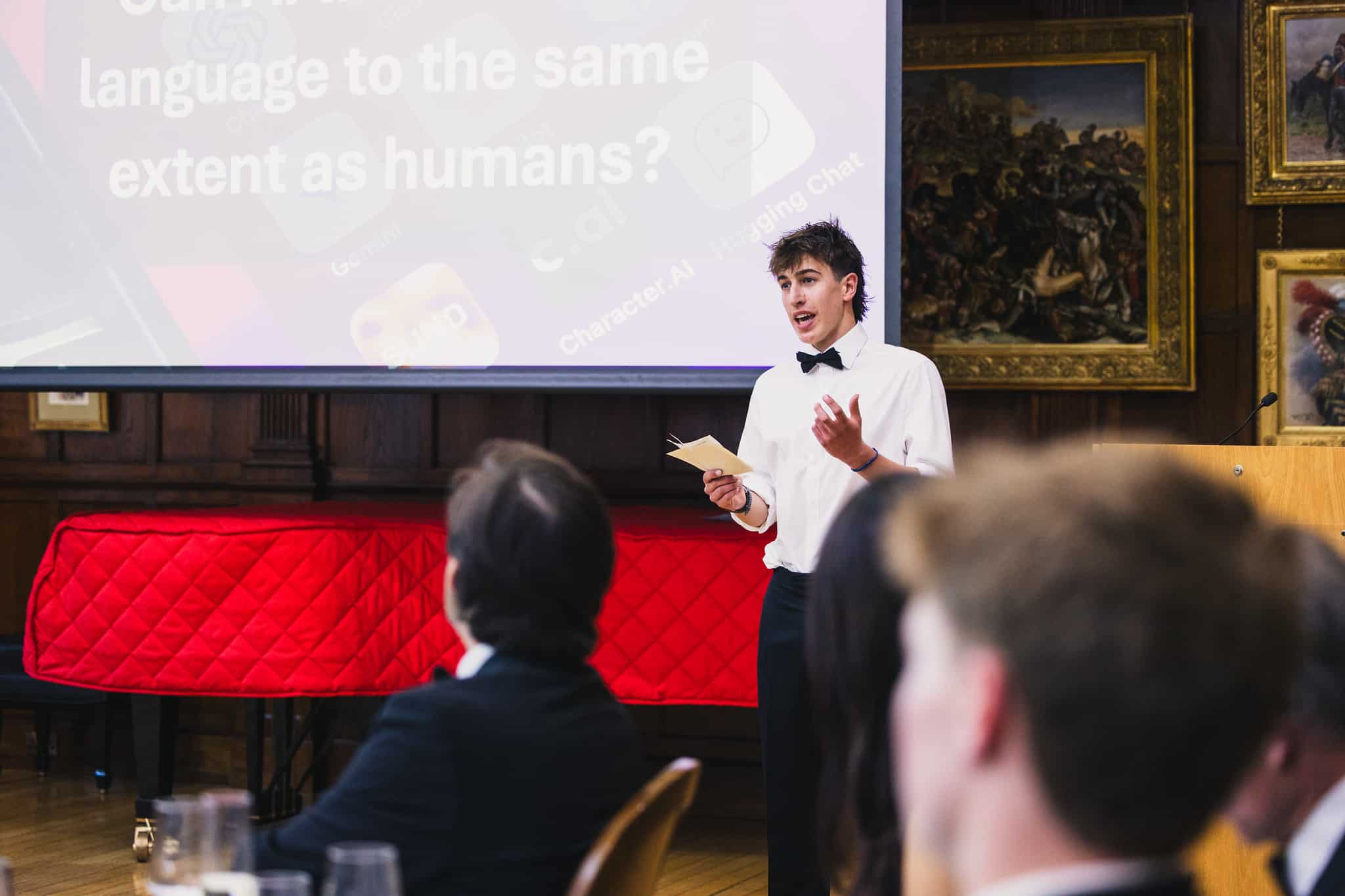
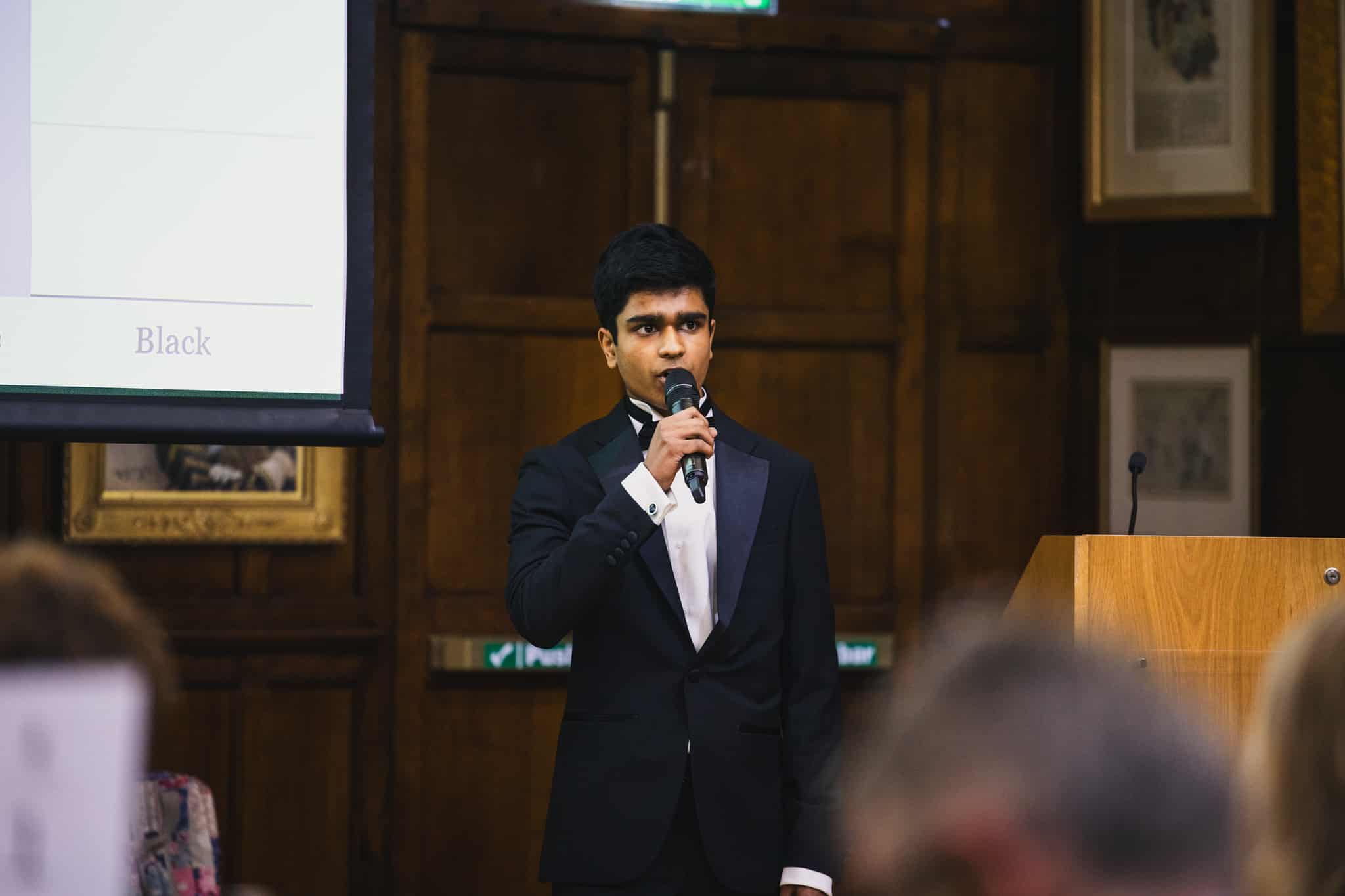
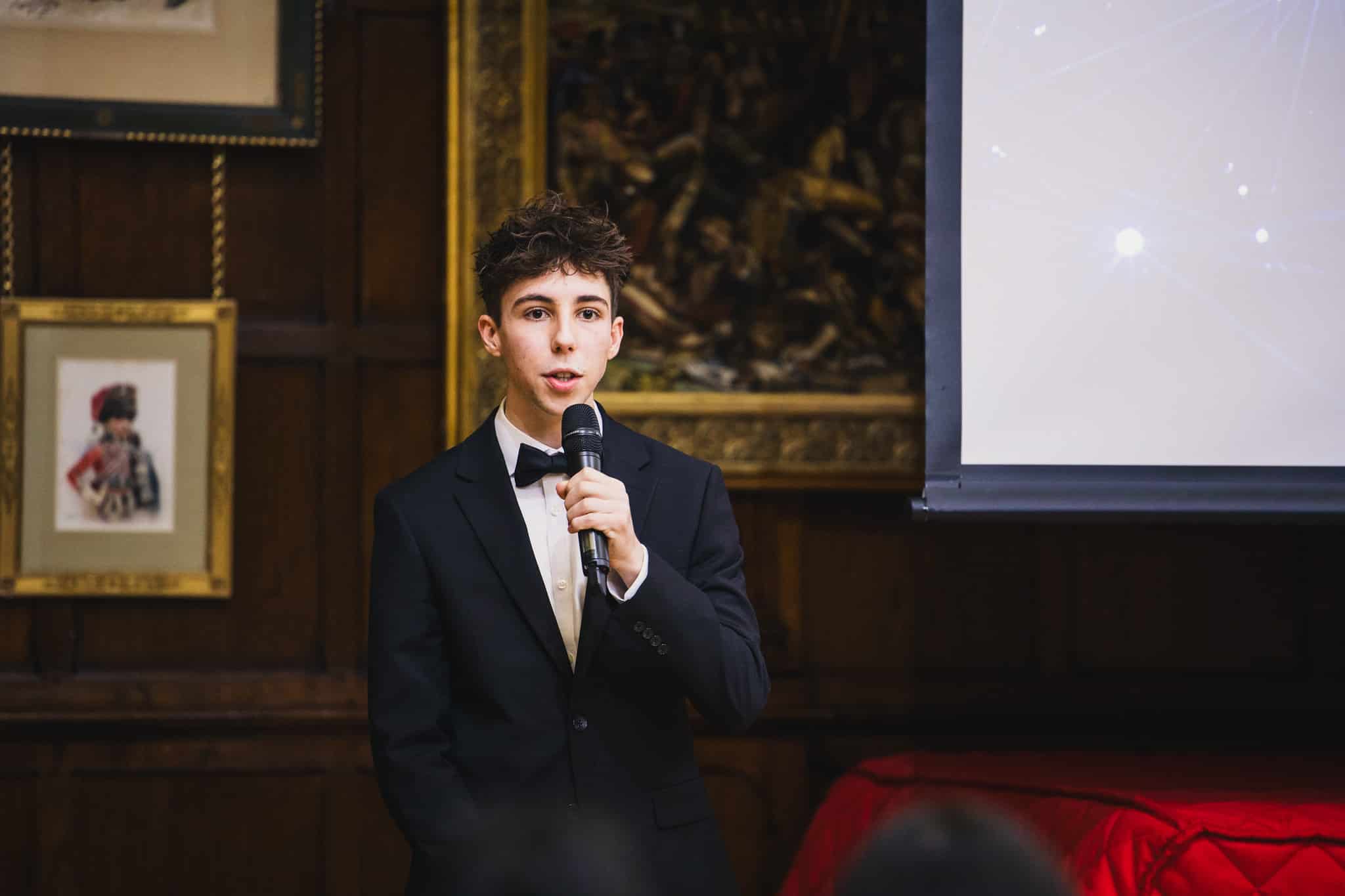
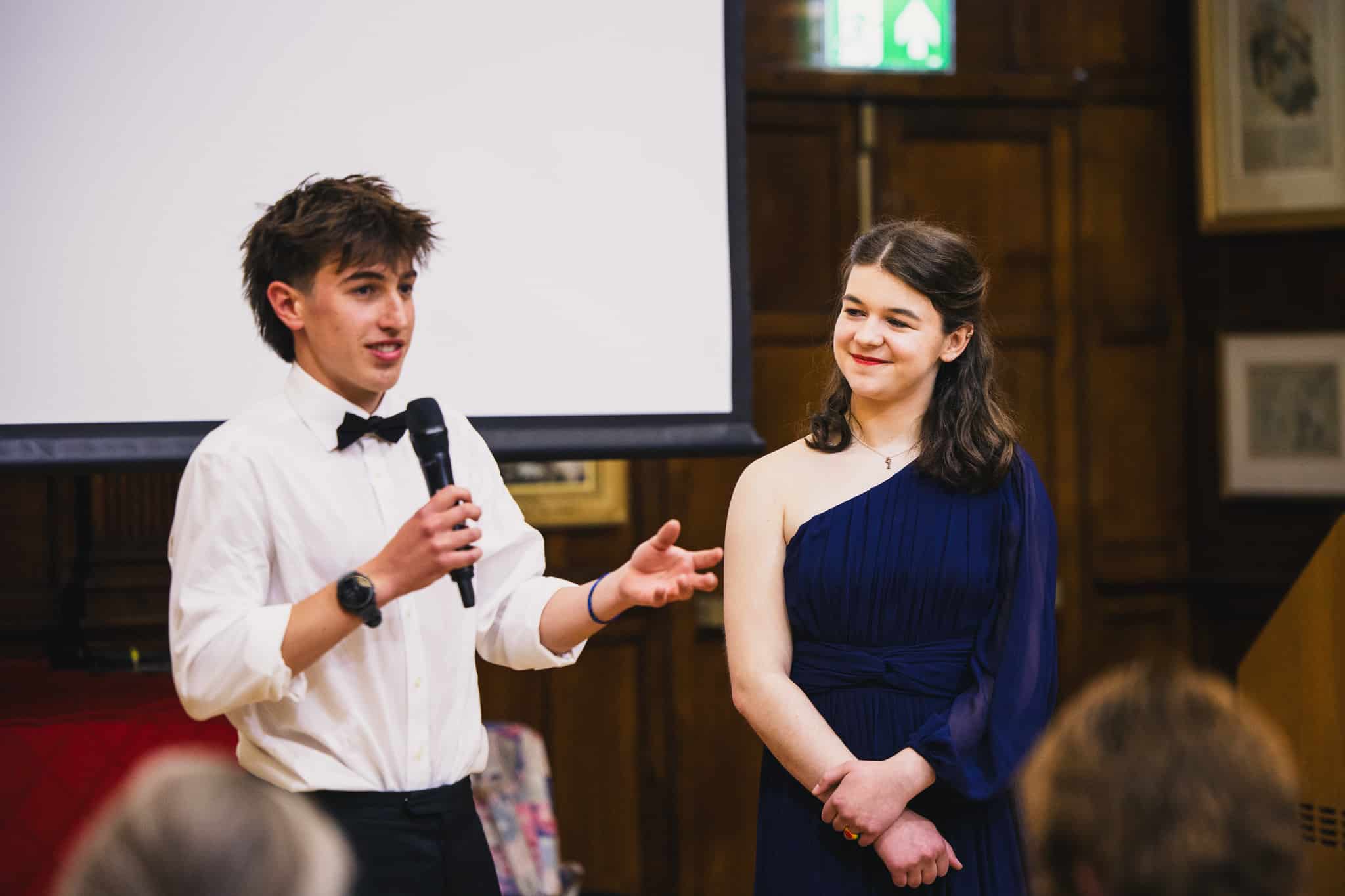
As the evening unfolded, the three finalist pairs took to the floor between courses, each presentation offering a fresh and thought-provoking perspective on the central theme.
Rufus and Meimei opened with a compelling exploration of uncertainty, arguing that it lies at the very heart of what it means to be human. Drawing on philosophy, history, and information theory, they suggested that while past intellectual revolutions were driven by increasing access to information, and therefore greater doubt, the rise of AI may be reversing this trend. In a world of instant, authoritative answers, they questioned whether we are losing our capacity for uncertainty, and with it, a vital part of our humanity.
Next, Millie and Jamie, this year’s winners of the Klaus Dodds Prize for Academic Extension, examined the subtle but powerful ways in which AI shapes human thinking. Their project revealed how systems such as large language models and recommender algorithms do not simply reflect reality, but actively structure it, reinforcing biases, narrowing perspectives, and encouraging passive consumption of information. Their argument centred on the idea of “invisible control”: that AI is quietly influencing what we see, think, and believe, often without our awareness.
Finally, Dom and Rohan tackled the question of whether AI can truly understand language. Bringing together insights from linguistics, philosophy, and biology, they argued that while AI can convincingly imitate human communication, it lacks the intention, cultural depth, and emotional nuance that underpin genuine understanding. Their conclusion was clear: language is not just a system of patterns, but a fundamentally human expression of meaning, identity, and experience.
More than anything, the evening was a celebration of what it means to be a scholar: to question, to explore, and to embrace complexity. The work on display was not only academically impressive, but deeply reflective of a generation thinking seriously about the challenges and opportunities of the future.
As the evening drew to a close, there was a shared sense of pride, not only in the achievements of the finalists and winners, but in the spirit of intellectual exploration that defines the Upper School Scholars Programme. It was, in every sense, a truly wonderful evening.

Prev article
Next article